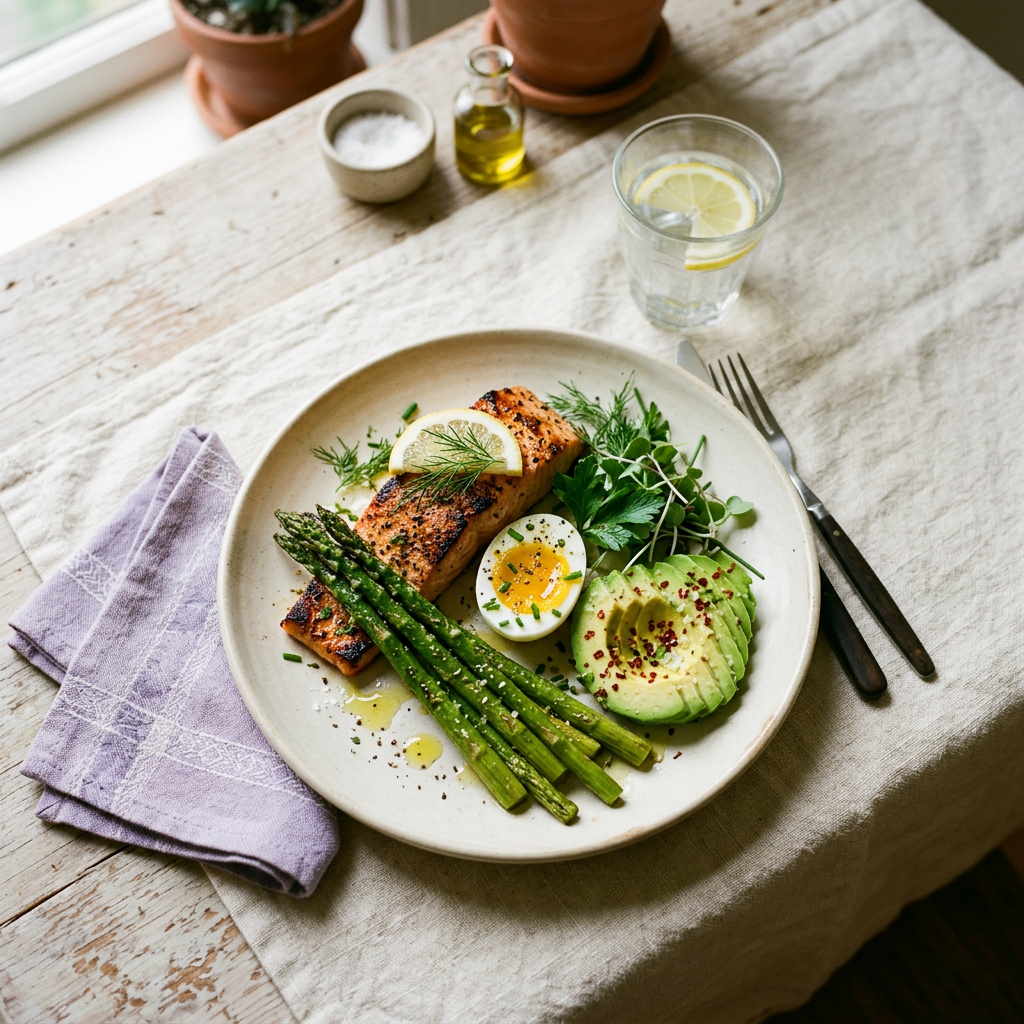
This lunch bowl uses canned chickpeas, canned light tuna, olive oil, lemon, and simple pantry ingredients. It requires no cooking, takes five minutes to prepare, and delivers 35 grams of protein and 14 grams of fiber. The recipe includes diced cucumber, tomatoes, red onion, feta, olives, and herbs, all mixed with a dressing of olive oil, lemon juice, vinegar, and oregano.
Most lunch failures aren't recipe failures. They're decision failures — the moment at 12:45 p.m. when you have nothing prepped, no plan, and a kitchen full of food that doesn't add up to a lunch.
This bowl exists for exactly that moment. It uses five pantry staples, requires zero heat, takes 5 minutes start-to-finish, and lands at 35 grams of protein and 14 grams of fiber. If you're on a GLP-1, navigating a low-appetite day, or just sick of sad desk salads, this is the no-thinking-required version.
Why this combo, specifically.
The math behind a real lunch isn't complicated:
- Protein floor of 30+ grams at midday to extend the muscle-protein-synthesis window from breakfast. The Harvard T.H. Chan School of Public Health recommends spreading protein across meals rather than loading it at dinner.
- Fiber from beans + vegetables to slow gastric emptying further (you're already slowed on a GLP-1; a fiber-rich lunch extends the runway to 6 p.m.).
- Omega-3-bearing fish because lunch is the realistic place to get them on a weekday. Canned light tuna is one of the FDA's "best choices" — lower mercury than albacore, higher omega-3s than most pantry alternatives.
- Healthy fats from olives and olive oil to keep the bowl satiating without a giant calorie load.
This bowl hits all four levers in 5 minutes.
Ingredients (one big bowl)
- 1 can (5 oz) light tuna in olive oil, drained (or in water, with 1 extra tsp olive oil added)
- 1 can (15 oz) chickpeas, drained and rinsed
- 1/2 English cucumber, diced (about 3/4 cup)
- 1 cup cherry tomatoes, halved
- 1/4 small red onion, finely diced
- 1/3 cup crumbled feta cheese
- 2 tbsp pitted Kalamata olives, halved
- 2 tbsp extra-virgin olive oil
- Juice of 1/2 lemon (about 1 tbsp)
- 1 tsp red wine vinegar
- 1 tsp dried oregano
- Salt and pepper to taste
- Handful of fresh parsley or basil, chopped (optional but worth it)
Method (5 minutes, no heat)
1. Drain and rinse the chickpeas. Pat them dry with a paper towel — the salad holds together better when they're not wet. 2. Build the bowl in this order: chickpeas first (base), then drained tuna broken into chunks on top, then the cucumber, tomatoes, onion, olives, and feta around the edges. 3. Whisk the dressing in a small jar: olive oil, lemon juice, vinegar, oregano, salt, pepper. Shake hard for 10 seconds. 4. Pour over the bowl and toss gently. Don't mash the tuna — you want visible chunks for texture. 5. Top with fresh herbs. Eat immediately, or refrigerate up to 24 hours (the flavor actually improves overnight).
Nutrition per bowl (approximate)
- Calories: ~540
- Protein: ~35 g
- Fiber: ~14 g
- Carbs: ~40 g (mostly slow-digesting from chickpeas)
- Fat: ~24 g (predominantly mono- and polyunsaturated)
- Omega-3 (EPA + DHA): ~250 mg
- Calcium: ~180 mg
- Iron: ~5 mg
The Sunday pantry list (one trip, five lunches)
Stock these once a week and you have five workday lunches:
- 5 cans light tuna in olive oil
- 5 cans chickpeas (or 2 cans + a container of pre-cooked grain like quinoa for variety)
- 1 English cucumber
- 1 pint cherry tomatoes
- 1 small red onion
- 1 small container crumbled feta
- 1 jar Kalamata olives
- 1 lemon
- Bottle of olive oil (you have this)
Total cost runs about $25–32/week depending on your grocery, which works out to ~$5/lunch — meaningfully cheaper than the $15 sad-salad option from the lobby.
4 variations on the base bowl
Salmon version: Swap the tuna for a single-serve foil pouch of wild-caught canned salmon. Higher omega-3 count, more iron, slightly higher cost. Same method.
Grain bowl: Add 1/2 cup cooked quinoa or farro to the base. Bumps calories to ~640, adds 5g of fiber, and turns it into a meal-prep dinner that holds in the fridge for 3 days.
No-cheese / dairy-free: Skip the feta, double the olives, add 1 tbsp tahini to the dressing. Still hits 32g protein with the dairy out.
Spicy version: Add 1/2 tsp red pepper flakes to the dressing and 1 tsp harissa or chili crisp on top. The capsaicin slows eating speed slightly — useful if you're working on portion-pacing.
Why canned tuna, not chicken.
Chicken would be the obvious move. But canned light tuna outperforms it on three lunch-specific metrics:
- No cooking required. Chicken means you cooked it, which means you planned ahead. Tuna means you opened a can.
- Omega-3 content. A 5-oz can of light tuna has roughly 200–250 mg of EPA + DHA. Chicken has essentially none.
- Mercury safety. The FDA's advice about eating fish places light tuna in the "best choices" tier — 2–3 servings per week is safe for most adults, including pregnant women.
If you don't eat fish, the rotisserie-chicken version of this bowl works fine — strip 4 oz of meat from a rotisserie bird, skip the lemon-and-oil dressing for a Greek yogurt-and-lemon dressing, and you're still at 35g protein.
What this bowl isn't trying to be
- A weight-loss recipe. It's a balanced lunch. Calories aren't restricted — if you're in a strict deficit, halve the olive oil and skip the feta.
- A fancy lunch. This is the lunch you eat at your desk. It looks like an Aldi salad and tastes better than it has any right to.
- A meal that holds for a week. The chickpeas and tomatoes degrade past 48 hours. Make Tuesday's bowl on Sunday night; make Thursday's bowl on Tuesday night.
How this fits the bigger picture
Pair this with the 40-gram-protein breakfast smoothie and you've already hit 75 grams of protein and 24 grams of fiber by 1 p.m. — without thinking about food beyond opening a blender and a can. The remaining 25–40 grams of protein at dinner gets you to a complete protein day with effectively zero meal-planning friction.
That's the underrated argument for repetition: low-effort breakfasts and low-effort lunches free you up to actually cook a real dinner. The Mediterranean salmon bowl or the Greek chicken souvlaki meal prep takes 30 minutes when breakfast and lunch took six total.
Lunch should not be the part of the day you have to think about. Two cans, a knife, a bowl, and a lemon. Five minutes. 35 grams of protein. Done.
Sources: Harvard T.H. Chan School of Public Health on protein; FDA advice about eating fish; USDA FoodData Central for nutrient calculations.
Compounded GLP-1, with clinician oversight.
DirectCare AI prescribes compounded semaglutide and tirzepatide with the nutrition coaching to make a suppressed appetite still hit protein and fiber.
See if you qualify →Editorial disclosure: This article is for informational purposes only and does not constitute medical advice. All treatments at DirectCare AI are prescribed by US-licensed clinicians based on individual medical evaluation. Compounded medications are not FDA-approved and are not reviewed by the FDA for safety, effectiveness, or quality. Always consult a US-licensed clinician before starting or changing any therapy.