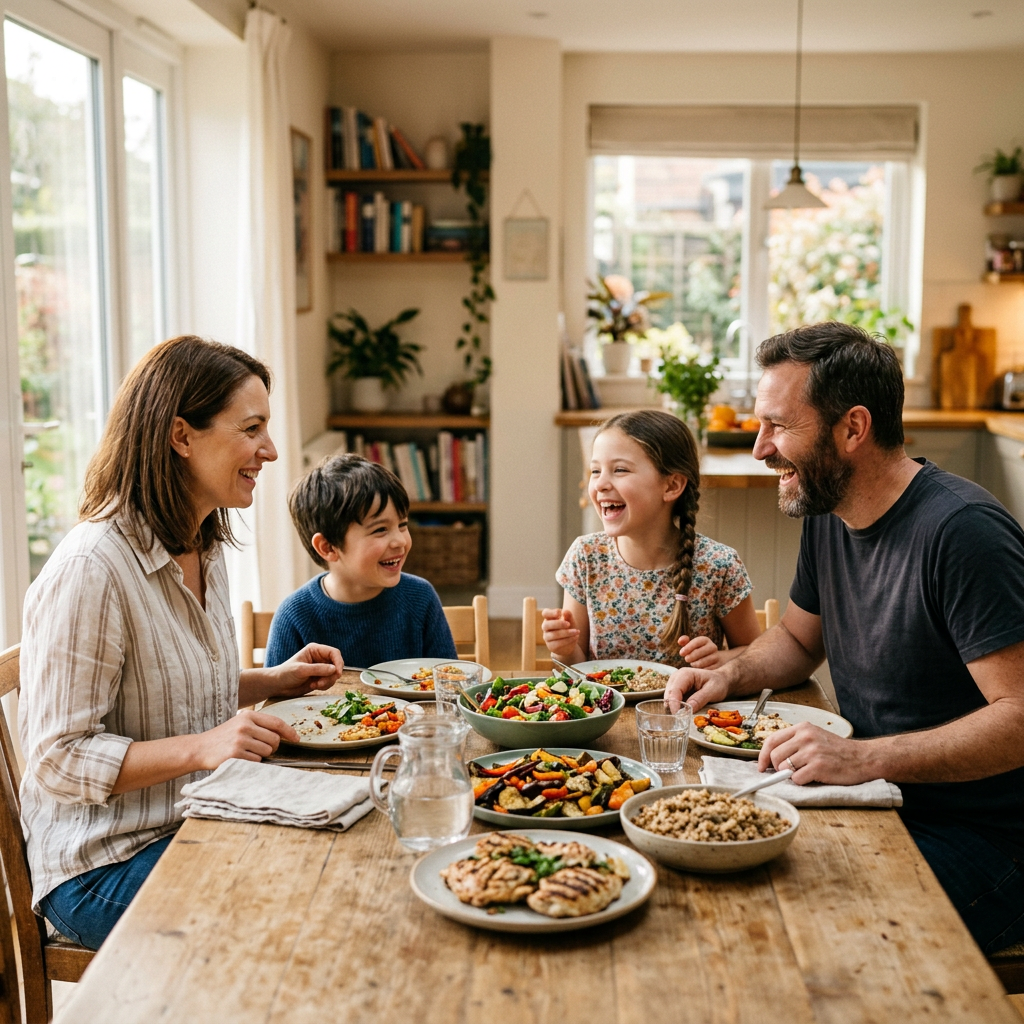
This Mediterranean salmon bowl delivers 38 grams of protein, 10 grams of fiber, and 2.4 grams of omega-3s in a 30-minute sheet-pan meal. It features wild salmon, chickpeas, quinoa, broccoli, tomatoes, cucumber, and Greek yogurt, all roasted together with olive oil and lemon. The recipe is designed for people on GLP-1 medications who need nutrient-dense meals that support muscle preservation and satiety.
If you're on semaglutide or tirzepatide, you already know the problem: your appetite has been dialed down to a whisper, and whatever you do eat needs to do the work of several normal meals. That's where this bowl earns its keep.
It's protein-forward (38 g), fiber-dense (10 g), packed with omega-3s, and built around foods your gut will still tolerate on a GLP-1. The base is adapted from a Mediterranean salmon-bowl pattern popularized by The Mediterranean Dish. We tightened the protein math for telehealth patients on appetite-suppressing protocols.
Why this bowl, specifically.
Three nutrition rules matter on a GLP-1, and this bowl hits all three.
- Protein first. When appetite is suppressed, you need to front-load protein at every meal so the muscle-preservation signal stays loud. Salmon delivers ~30 g per 5 oz serving, and chickpeas + Greek yogurt add another 8 g.
- Fiber for satiety and gut transit. GLP-1s slow gastric emptying, which makes high-fiber, water-rich foods sit better than dense starches. Broccoli, chickpeas, and tomatoes here = roughly 10 g of fiber.
- Omega-3s for the inflammation lever. Wild salmon delivers 1,500+ mg of combined EPA + DHA per 5 oz. Meaningful from a single meal. The Harvard T.H. Chan School of Public Health ranks fatty fish as the highest-leverage way to close the omega-3 gap most American diets have.
Ingredients (serves 2)
- 10 oz salmon fillets (two 5 oz portions, skin-on, wild caught when available)
- 1 cup uncooked quinoa or farro (about 2 cups cooked)
- 3 cups broccoli florets (about one medium head)
- 1 cup cherry tomatoes, halved
- 1 (15 oz) can chickpeas, drained and rinsed
- 1/2 cup Greek yogurt (full-fat, plain. The protein matters)
- 1 small cucumber, diced
- 1 garlic clove, minced
- 2 tbsp extra-virgin olive oil, divided
- 1 lemon, half juiced + half cut into wedges
- 1 tsp dried oregano
- Salt, pepper, red pepper flakes to taste
- Optional: a handful of kalamata olives, fresh dill or parsley
Method (30 minutes start to finish)
1. Heat the oven and start the quinoa.
Preheat your oven to 425°F (220°C) and line a sheet pan with parchment. Bring 2 cups of water (or low-sodium broth) and the quinoa to a boil in a small saucepan, then reduce to a simmer, cover, and cook 12 to 15 minutes until the liquid is absorbed.
2. Roast the salmon and broccoli together.
Toss the broccoli with 1 tbsp olive oil, a pinch of salt, and a few cracks of pepper, and spread it on the sheet pan. Pat the salmon dry, rub it with the remaining 1 tbsp olive oil, and season with salt, pepper, and oregano. Nestle the salmon among the broccoli.
Roast 12 to 14 minutes. Until the broccoli edges are crisp and a thermometer in the thickest part of the salmon reads 125 to 130°F (it'll carry over to 145°F, the USDA target, as it rests).
3. Make the tzatziki-style sauce.
While the pan is in the oven, stir together the Greek yogurt, diced cucumber, garlic, lemon juice, a pinch of salt, and red pepper flakes if you like a little heat. Taste, adjust.
4. Build the bowls.
Divide the cooked quinoa between two bowls. Layer with the roasted broccoli, cherry tomatoes, and chickpeas. Place a salmon fillet on top, spoon over the sauce, scatter olives and herbs if using, and finish with a lemon wedge.
Nutrition per bowl (approximate)
- Calories: ~580
- Protein: ~38 g
- Fiber: ~10 g
- Carbs: ~52 g (mostly complex from quinoa and vegetables)
- Fat: ~24 g (mostly mono- and polyunsaturated)
- Omega-3 (EPA + DHA): ~1,500 mg
Those numbers track closely to what the Mayo Clinic recommends as the model meal pattern for the Mediterranean diet, which is the eating pattern with the strongest evidence base for cardiovascular and metabolic health.
Variations that still hit the targets
- Vegetarian swap: Replace salmon with 1 cup cooked white beans + 1/2 cup feta per bowl. Protein lands around 28 g. Lower than the salmon version, but with the same fiber and Mediterranean profile.
- No quinoa on hand: A bed of arugula or massaged kale works. You'll trade some calories and complex carbs for more micronutrients.
- Higher protein push: Add a sliced hard-boiled egg or another 2 oz of salmon. Easy way to land 45+ g for patients targeting body-recomp ratios.
- Meal-prep version: Bake 4 salmon fillets and triple the quinoa and broccoli at once. The cooked components hold in the fridge for 3 days; assemble bowls as you go.
Why "protein first" matters more on a GLP-1
We've written separately about why preserving muscle on a GLP-1 isn't optional and the four-rule nutrition framework that lives behind recipes like this one. The short version: your appetite is the limiting reagent now, so every bite has to pull its weight. A bowl like this is the easiest way to put 38 g of protein and 10 g of fiber on a plate without forcing yourself through volume you don't want.
The patients who do best on GLP-1s over 12+ months aren't the ones eating less of everything. They're the ones eating more of a small number of nutrient-dense meals. And this is one of them.
Recipe adapted from The Mediterranean Dish. Mediterranean Salmon Bowls, with protein and fiber adjusted for GLP-1 patient targets. Nutrition guidance drawn from Harvard T.H. Chan School of Public Health and the Mayo Clinic Mediterranean Diet overview.
Compounded GLP-1, designed for body recomp.
DirectCare AI builds GLP-1 protocols with protein targets, training cadence, and quarterly monitoring. So the loss is fat, not muscle.
See if you qualify →Editorial disclosure: This article is for informational purposes only and does not constitute medical advice. All treatments at DirectCare AI are prescribed by US-licensed clinicians based on individual medical evaluation. Compounded medications are not FDA-approved and are not reviewed by the FDA for safety, effectiveness, or quality. Always consult a US-licensed clinician before starting or changing any therapy.