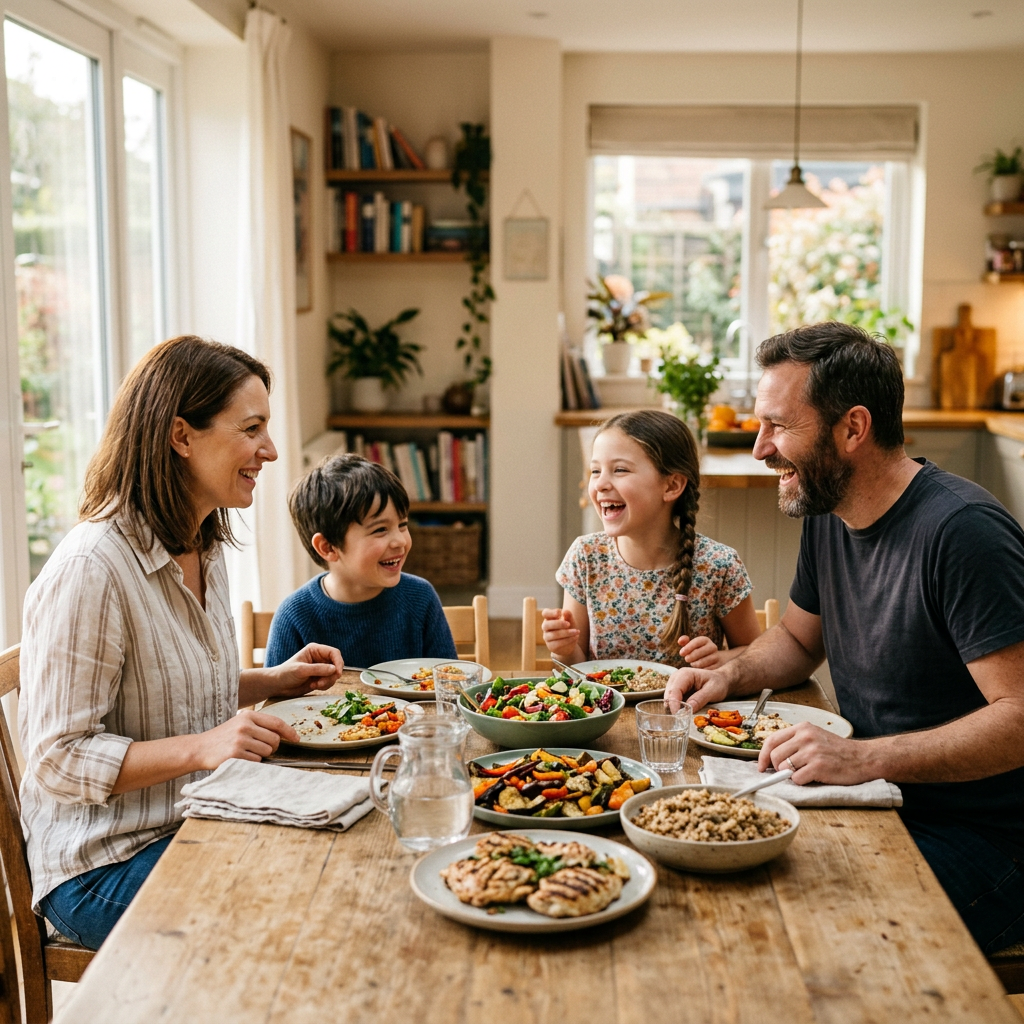
Some recipes earn a slot in your weekly rotation because they're impressive. This one earns a slot because you'll actually make it on a Tuesday at 7 PM when you're tired and slightly cranky.
One skillet. Thirty minutes. Real Greek flavors that come from one move most home cooks skip: aggressive lemon and a serious amount of oregano. Thirty-eight grams of protein, nine grams of fiber, and quinoa that absorbs all the flavor from the chicken pan rather than getting cooked separately in plain water.
Why this recipe, specifically.
Three structural choices behind it:
- Chicken thighs instead of breasts. Thighs stay tender at high heat, finish faster than they look like they should, and have meaningfully more flavor. The 2 extra grams of fat per serving is the cost; it's the right trade.
- Quinoa cooked in the same pan as the chicken soaks up the lemon, garlic, and chicken fond. The flavor density is dramatically better than quinoa cooked separately in plain water, with zero extra effort.
- Real lemon, real oregano, real garlic. The Mediterranean flavor profile lives or dies on these three. Dried oregano works fine; bottled lemon juice and pre-minced garlic don't.
Ingredients (serves 2 generously, or 4 with a side salad)
- 1.25 lb boneless, skinless chicken thighs, cut into 1.5-inch chunks (about 5–6 thighs)
- 1 cup quinoa, rinsed under cold water for 30 seconds (this removes the bitter coating)
- 2 cups low-sodium chicken broth
- 4 cloves garlic, minced
- 1 small yellow onion, finely diced (about 3/4 cup)
- 2 tbsp extra-virgin olive oil, divided
- Zest of 1 lemon + juice of 1 whole lemon (about 3 tbsp)
- 2 tsp dried oregano
- 1 tsp dried thyme
- 1/2 tsp red pepper flakes (optional)
- Salt and freshly ground black pepper
- 1/4 cup fresh parsley, roughly chopped
- 1/3 cup crumbled feta cheese
- Optional: Kalamata olives, halved cherry tomatoes, or a dollop of Greek yogurt for serving
Method (30 minutes start to plate)
1. Season and brown the chicken. Pat the chicken thigh chunks dry, season generously with salt, pepper, and 1 tsp of the oregano. Heat 1 tbsp olive oil in a large skillet (12-inch is ideal) over medium-high heat. When the oil shimmers, add the chicken in a single layer. Don't stir for the first 90 seconds — you want a golden sear. Stir-fry for another 3–4 minutes until cooked through. Transfer to a plate.
2. Build the quinoa base. Reduce heat to medium. Add the remaining 1 tbsp olive oil to the same skillet. Add the onion, sauté for 2 minutes until softened. Add the minced garlic, the remaining 1 tsp oregano, the thyme, and red pepper flakes (if using). Stir for 30 seconds — the kitchen will smell incredible.
3. Add the quinoa and broth. Pour in the rinsed quinoa and stir it through the onion-garlic mixture for 30 seconds (this toasts it slightly, which helps with flavor). Add the chicken broth and lemon zest. Bring to a boil, then reduce heat to low, cover, and simmer for 12 minutes.
4. Return the chicken to the pan. After 12 minutes, the quinoa should have absorbed most of the broth. Add the chicken back to the skillet (along with any juices on the plate). Cover and simmer for 3 more minutes to warm the chicken through and finish the quinoa.
5. Finish off heat. Take the skillet off the heat. Drizzle the lemon juice over everything. Top with the fresh parsley and crumbled feta. Cover for 2 minutes to let everything settle.
6. Plate. Spoon into bowls. Add olives, tomatoes, or Greek yogurt if using.
Nutrition per serving (recipe makes 2 generous servings)
- Calories: ~580
- Protein: ~38 g
- Fiber: ~9 g
- Carbs: ~55 g (mostly slow-digesting from quinoa)
- Fat: ~20 g (mostly mono- and polyunsaturated from olive oil + feta)
- Iron: ~5 mg
- Calcium: ~180 mg (from feta + quinoa)
3 variations on the base
Shrimp version: Swap chicken for 1.25 lb large peeled shrimp. Cook in step 1 for only 2 minutes total — they're done as soon as they curl and turn pink. Same protein target, lighter mouthfeel.
Vegetarian version: Swap chicken for 1.5 cans (15 oz each) of drained and rinsed chickpeas. Skip step 1 entirely; add the chickpeas in step 4 to warm through. About 25g protein per serving (still solid), or push to 32g by doubling the feta.
Higher-protein version: Add 4 oz of crumbled feta instead of 1/3 cup, and serve with a side of plain Greek yogurt mixed with cucumber and dill. Pushes protein over 45g per serving without changing the main dish.
Make it ahead
Holds in the fridge for 3 days. Reheats well in a pan with a tablespoon of water (the microwave dries the quinoa out). The cooked dish portions cleanly into 4 lunch containers if you scale to the full 4-serving size.
How this fits the bigger picture.
Pair this with the 25-minute ginger chicken stir-fry on weeknights, harissa salmon on Saturdays, and the chickpea-and-tuna lunch bowl for desk lunches, and you've covered the protein-and-fiber template across most of the week with four recipes.
The 4-rule nutrition framework explains why this protein-forward, fiber-dense template works on a GLP-1 or HRT/TRT protocol. This recipe is the practical version.
One skillet. 30 minutes. 38 grams of protein. The Greek lemon chicken you'll write down and put on the Tuesday rotation, not just the Saturday one.
Sources: USDA FoodData Central for nutrient calculations; Harvard T.H. Chan School of Public Health on protein for daily protein targets.
Compounded GLP-1, with clinician oversight.
DirectCare AI prescribes compounded semaglutide and tirzepatide with the nutrition guidance to make a suppressed appetite still hit protein and fiber targets.
See if you qualify →Editorial disclosure: This article is for informational purposes only and does not constitute medical advice. All treatments at DirectCare AI are prescribed by US-licensed clinicians based on individual medical evaluation. Compounded medications are not FDA-approved and are not reviewed by the FDA for safety, effectiveness, or quality. Always consult a US-licensed clinician before starting or changing any therapy.