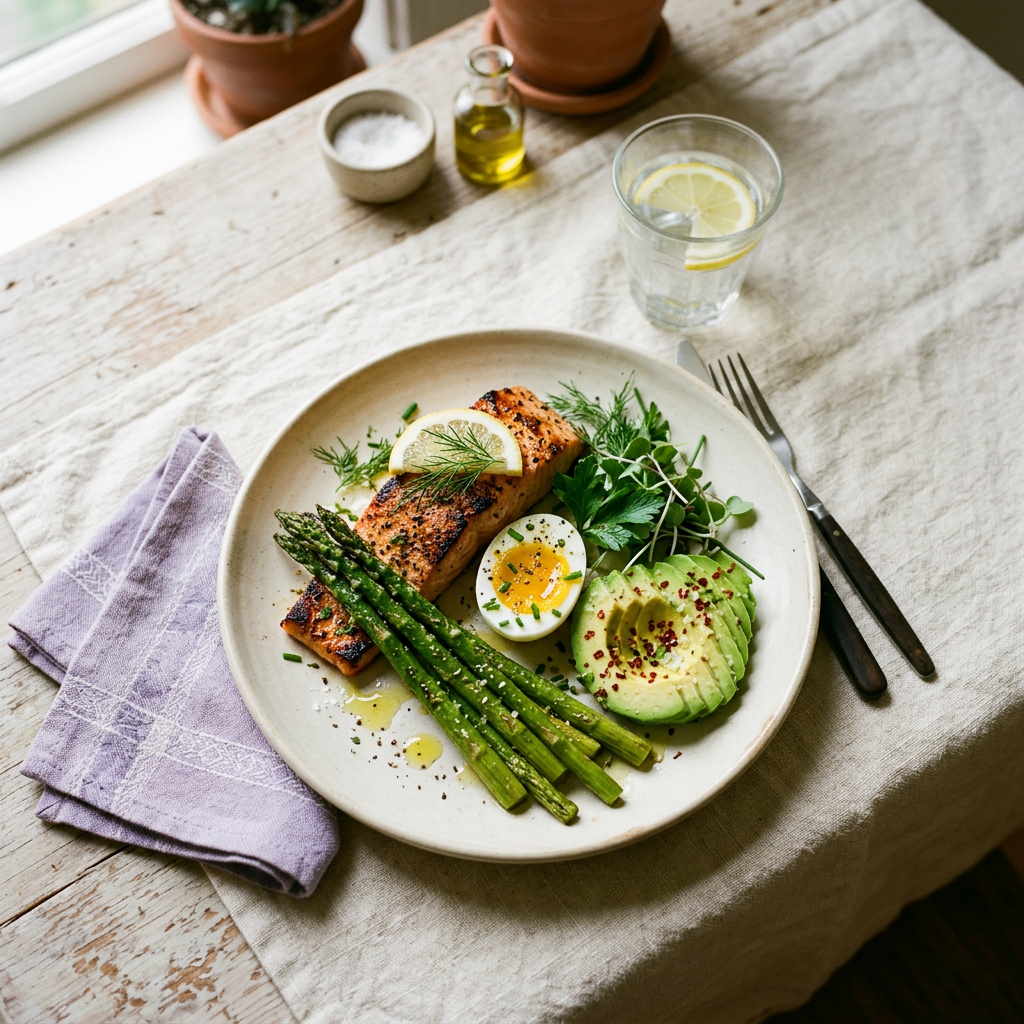
A Greek yogurt breakfast bowl made with one cup of plain non-fat Greek yogurt and two tablespoons of whey protein isolate provides about 40 grams of protein. Topping it with berries, chia seeds, walnuts, and a touch of honey completes the meal. This combination delivers high protein and fiber with minimal effort, taking just five minutes to prepare.
If your morning currently looks like coffee and a bagel, you're starting the day with about 10 grams of protein, a glucose spike, and a 10:30 a.m. hunger crash. None of that is doing your hormones, your weight, or your training any favors.
The fix is the most boring meal in the world, executed correctly: a Greek yogurt bowl. The trick is doing it with enough protein to actually count. Here's the version we recommend to patients on HRT, TRT, and GLP-1 protocols. Because all three benefit from a protein-front-loaded morning.
Why this bowl, specifically.
40 grams of protein at the first meal of the day is what the muscle-protein-synthesis literature consistently points to as the threshold that meaningfully outperforms a 20-gram breakfast. The International Society of Sports Nutrition position stand on protein puts the per-meal target at 0.4 to 0.55 g/kg body weight. Which lands most adults at 30 to 45 g per meal.
Greek yogurt is the cleanest at-home way to hit it. A full cup of plain non-fat Greek yogurt delivers about 24 g of protein on its own. Add a protein-dense topping and you're at 40 g without having cooked anything.
Ingredients (single bowl)
- 1 cup plain non-fat Greek yogurt (Fage, Chobani, or store brand. Check the label, you want ~20+ g protein per cup)
- 2 tbsp unflavored or vanilla whey protein isolate or a hard-boiled egg on the side
- 1/2 cup mixed berries (frozen is fine, microwave 30 seconds first)
- 1 tbsp chia seeds
- 1 tbsp chopped walnuts or sliced almonds
- 1 tsp honey or pure maple syrup (optional, skip if you're carb-conscious)
- A pinch of cinnamon
Method (5 minutes)
1. Scoop the Greek yogurt into a bowl. 2. Whisk the whey protein into the yogurt with 1 to 2 tablespoons of water until smooth. (If you skip the whey, eat the hard-boiled egg alongside.) 3. Top with the berries, chia, nuts, optional honey, and cinnamon.
That's the whole thing. Five minutes is generous; you can do it in two.
Nutrition per bowl (approximate)
- Calories: ~410
- Protein: ~40 g
- Fiber: ~8 g (mostly from chia and berries)
- Carbs: ~28 g
- Fat: ~12 g (mostly mono- and polyunsaturated)
Why berries, specifically.
Berries are the highest-fiber-to-sugar fruits available. About 4 g of fiber per cup for blueberries and raspberries, with the lowest glycemic load in the produce aisle. The USDA FoodData Central breakdown is worth a glance if you're optimizing.
Frozen mixed berries are equally nutritious to fresh, often cheaper, and meaningfully easier on a January Tuesday morning.
Variations
- Savory version: Skip the berries and honey. Top the yogurt with cucumber, dill, and a soft-boiled egg. Same protein, completely different meal.
- Dairy-free swap: Use plain unsweetened soy yogurt (the only non-dairy yogurt with a meaningful protein count) plus 2 tbsp pea protein isolate.
- Higher protein push: Add a tablespoon of hemp seeds (3 g) and a second tablespoon of whey. Lands closer to 50 g for patients with serious protein targets.
- Sleep-supporting variation: Swap honey for tart cherry juice (~1 tbsp). The melatonin precursors in tart cherries pair well with the casein-heavy protein profile if you're eating this as a pre-bed snack instead of breakfast.
How this fits a longer protocol
If you're working through one of our published nutrition frameworks , the 4-rule food framework for GLP-1 patients or the muscle-preservation logic in body recomp on GLP-1s. This bowl is the easiest possible execution of rule #1 (protein first).
Repeat it on the busiest days. The patients who hit their annual targets aren't the ones with the most variety on the menu. They're the ones with a default breakfast they can do in their sleep.
Boring breakfasts win the year. Pick one that hits your protein target and put it on rotation.
Sources: USDA FoodData Central for nutrient values; International Society of Sports Nutrition position stand on protein for per-meal targets; Harvard T.H. Chan School of Public Health on protein quality.
Compounded GLP-1, with clinician oversight.
DirectCare AI builds GLP-1 protocols around your bloodwork, your training, and a nutrition plan that actually works at a suppressed appetite.
See if you qualify →Editorial disclosure: This article is for informational purposes only and does not constitute medical advice. All treatments at DirectCare AI are prescribed by US-licensed clinicians based on individual medical evaluation. Compounded medications are not FDA-approved and are not reviewed by the FDA for safety, effectiveness, or quality. Always consult a US-licensed clinician before starting or changing any therapy.