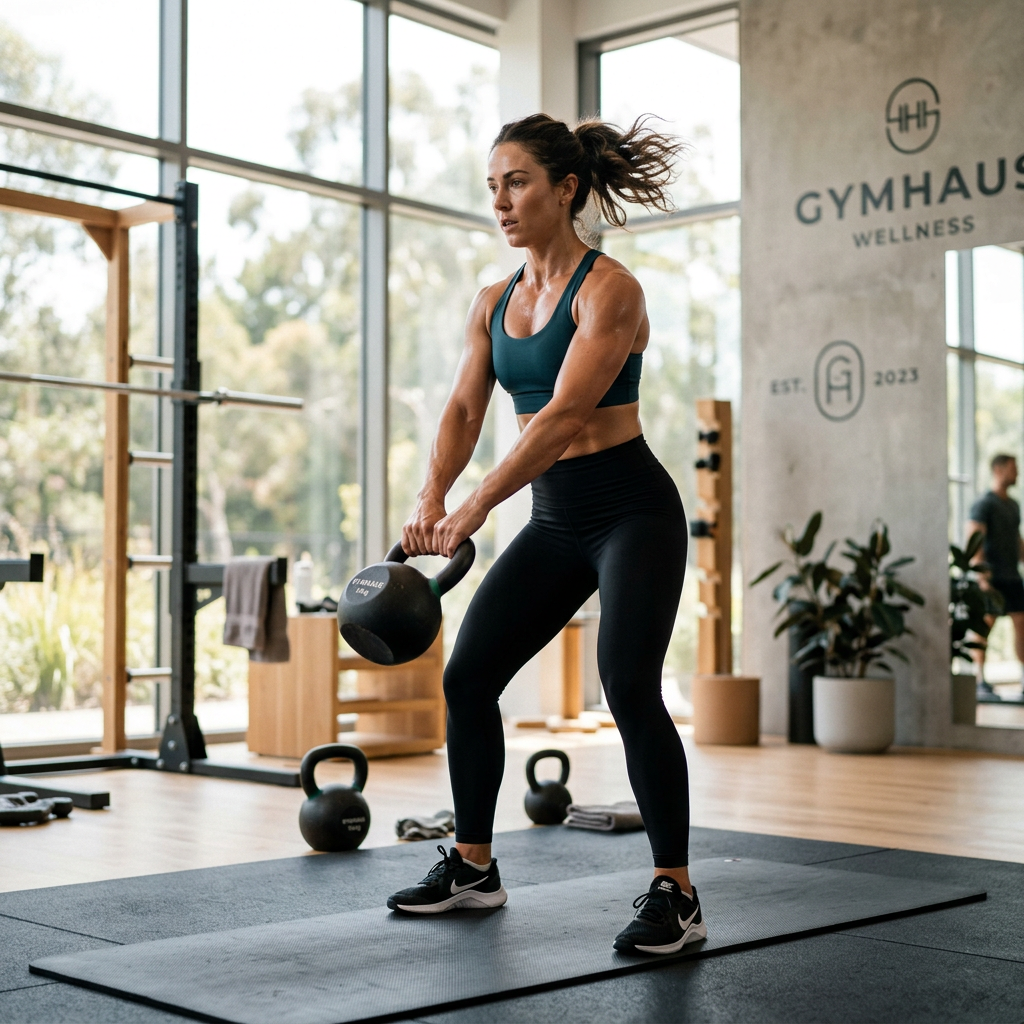
Grip strength is doing something strange in the longevity literature: it keeps outperforming markers we spent decades telling patients to worry about. In the PURE study — 140,000 adults across 17 countries — every 5 kg drop in handgrip strength was associated with a 16% higher risk of all-cause mortality, and it predicted cardiovascular death more accurately than systolic blood pressure (Leong et al., Lancet 201562000-6/fulltext)).
That's not a claim that squeezing a tennis ball extends your life. It's a claim that grip is a proxy — for total muscle mass, neuromuscular integrity, and how much load your body still tolerates. When it falls, something upstream is usually falling too.
Below: why the signal is real, how to measure yours, and the three exercises that actually move the number.
Why grip strength tracks with mortality — in plain English
Grip is a full-body tell. To squeeze hard, you need forearm and hand musculature, but you also need shoulder stability, thoracic bracing, and a nervous system that can recruit motor units on demand. Lose any of those, and grip drops before your bench press does.
That's why grip shows up in so many outcome studies:
- Cardiovascular mortality: Every 5 kg decrease in grip = 17% higher CV death risk (PURE, 2015).
- All-cause mortality: Consistent across 42 studies in a 2018 BMJ meta-analysis (Celis-Morales et al.).
- Post-surgical recovery: Low preoperative grip predicts longer hospital stays and higher complication rates in older adults.
- Cognitive decline: UK Biobank data links lower grip to accelerated brain aging and worse fluid intelligence scores.
The mechanism isn't magic. Grip strength correlates with type II muscle fiber preservation, and type II fibers are the first to atrophy in sarcopenia. Preserve them, and you preserve a lot of what makes an older body functional.
What counts as "good" grip — tuned to your numbers
You need a hand dynamometer to measure this precisely, but the rough benchmarks from normative data (Bohannon, 2019) are:
- Men 40–60: Concerning below ~40 kg; healthy 45–55 kg; strong 55+ kg.
- Women 40–60: Concerning below ~25 kg; healthy 28–35 kg; strong 35+ kg.
No dynamometer? A field proxy: a healthy 40-year-old man should be able to hang from a pull-up bar for 45–60 seconds. A healthy 40-year-old woman, 30–45 seconds. Falling under 20 seconds is a signal worth paying attention to — not a diagnosis, but a signal.
Grip is not the goal. Grip is the gauge. Train the whole system and the gauge moves.
{callout: The bottom line} Grip strength is a whole-body biomarker disguised as a hand measurement — and unlike most biomarkers, you can train it directly with three movements and a barbell.
The 3 exercises that actually build grip — no gimmicks
Skip the spring-loaded grippers and stress balls. They train endurance in a small muscle group; they don't move the longevity-relevant number, which is peak crushing force under load. These three do.
1. Farmer's Carry
The single most efficient grip builder in the gym, because it trains grip under axial load the way real life does — carrying groceries, luggage, a toddler.
Protocol:
- Load: Start at ~50% of your bodyweight total (25% per hand) with dumbbells or trap-bar.
- Distance: 3 rounds of 40 meters, or 3 rounds of 30–45 seconds.
- Rest: 90 seconds between rounds.
- Frequency: 2x per week.
Progression rule: When you can complete all 3 rounds without setting the weight down, add 5–10% load the following session. Do not use straps.
2. Dead Hang
The cheapest longevity intervention in existence: a pull-up bar and gravity.
Protocol:
- Position: Full hang from a pull-up bar, arms straight, shoulders active (not shrugged into ears).
- Sets: 3 sets to about 80% of failure. If your max is 60 seconds, hang for 45–50.
- Rest: 2 minutes.
- Frequency: 3x per week — it's low-impact enough to do often.
Progression rule: Add 5 seconds per set per week until you clear 60 seconds. Then add load with a dip belt (5–10 lb increments).
3. Heavy Row (Barbell or Dumbbell)
The row is often programmed as a back exercise, but at heavy loads with a double-overhand grip, it's one of the best crushing-strength builders available — and it trains the posterior chain your grip depends on.
Protocol:
- Load: A weight that limits you to 6–8 reps with strict form.
- Sets/Reps: 4 sets of 6–8 reps.
- Rest: 2–3 minutes.
- Grip: Double-overhand, no mixed grip, no straps for at least the first 3 working sets.
- Frequency: 1–2x per week.
Progression rule: When you hit 8 reps on all 4 sets with clean form, add 5 lb the next session.
Warm-up (non-negotiable)
Before heavy grip work, especially over 40: 5 minutes of general warm-up (rowing machine, brisk walk), then wrist circles, band pull-aparts, and 2 light sets of the day's first exercise. ACSM guidelines recommend 5–10 minutes of low-intensity aerobic activity plus dynamic mobility before resistance training (ACSM Guidelines, 11th ed.).
How to program it into a real week — without overhauling everything
You don't need a grip-specific program. You need to stop avoiding grip work inside the training you already do.
A minimum effective dose looks like:
- Monday: Heavy row (4x6–8) + dead hang (3 sets)
- Wednesday: Dead hang (3 sets) as part of warm-up
- Friday: Farmer's carry (3 rounds) + dead hang (3 sets)
That's ~15 extra minutes per week. In 8–12 weeks, most previously untrained adults will see meaningful gains on the dynamometer, and — more importantly — a corresponding jump in the compound lifts that depend on grip.
When grip stays weak despite training — what to check next
If you've trained consistently for 3+ months and grip hasn't moved, the issue usually isn't the program. Common culprits:
- Undertraining protein. Muscle protein synthesis in adults over 40 requires ~1.6 g/kg/day for hypertrophy (Morton et al., 2018). Under that, you're recovering, not building.
- Low testosterone or thyroid dysfunction. Both suppress the anabolic response to training. If strength gains have plateaued across the board — not just grip — a workup is worth considering. The labs worth having before assuming it's just "aging" typically include a full testosterone panel (total, free, SHBG), TSH with free T4, and a CBC/CMP.
- Peripheral neuropathy. Numbness or tingling with grip work is not a training problem; it's a medical one. Get it checked.
- Sleep under 6 hours. Grip strength drops measurably after acute sleep restriction, and chronic restriction blunts training adaptation.
Grip is a signal. When it doesn't respond to training, treat it like any other biomarker that won't budge — look upstream.
The takeaway
Grip strength predicts longevity because it summarizes a lot of things at once: muscle mass, neuromuscular function, and how much load your body still handles. Three exercises — farmer's carry, dead hang, heavy row — trained twice a week, will move the number in most adults within 3 months.
The hand dynamometer on your doctor's shelf isn't decorative. Ask them to use it. Then train the number down.
Real protocols, built around your bloodwork.
DirectCare AI prescribes hormone, weight-loss, and longevity protocols designed to layer on top of the training and nutrition habits that actually move outcomes.
Start an intake →Editorial disclosure: This article is for informational purposes only and does not constitute medical advice. All treatments at DirectCare AI are prescribed by US-licensed clinicians based on individual medical evaluation. Compounded medications are not FDA-approved and are not reviewed by the FDA for safety, effectiveness, or quality. Always consult a US-licensed clinician before starting or changing any therapy.