Grip strength is a strong predictor of how long you'll live, outperforming blood pressure in large studies. It reflects overall muscle mass, nerve function, and physical activity levels. Simple exercises like farmer’s carries, dead hangs, and heavy rows build grip strength efficiently. Tracking grip every three months helps monitor progress and overall health.
If you had to pick one single physical metric to predict how long an adult will live — better than blood pressure, better than resting heart rate, better than most blood tests — you might be surprised to learn the strongest contender is how hard you can squeeze a dynamometer with one hand.
Grip strength is one of the most validated biomarkers in longevity research. It's quick to measure, doesn't require advanced equipment, and produces remarkably consistent predictive results across populations.
Here's what the research actually shows, why grip is such a clean signal, and the three exercises that build it efficiently — no special equipment required.
What the data actually says.
The largest single study on grip strength and mortality is the PURE (Prospective Urban Rural Epidemiology) study — published in The Lancet in 2015, covering nearly 140,000 adults across 17 countries from low-, middle-, and high-income settings. The findings:
- Each 5 kg decrease in grip strength was associated with a 16% higher risk of all-cause mortality.
- Grip strength outperformed systolic blood pressure as a predictor of cardiovascular mortality.
- The relationship held across every population studied, regardless of country, income level, or baseline health.
Follow-up research has replicated and extended this:
- A 2018 BMJ analysis of nearly 500,000 UK Biobank participants found grip strength inversely correlated with risk of cardiovascular disease, respiratory disease, COPD, and all-site cancer.
- Grip strength is among the most robust predictors of healthy ageing and frailty avoidance.
- Multiple studies show grip strength tracks closely with cognitive function in older adults — declining grip often precedes measurable cognitive decline by years.
Why grip is such a clean longevity signal.
Grip strength is not really about your hands. It's a whole-body proxy:
- Muscle mass. Grip correlates with total lean body mass across the entire body. People with strong grips have more muscle everywhere.
- Neuromuscular function. Grip requires intact nerve-to-muscle signaling. Declining grip often signals declining neurological function.
- Recovery and cellular health. Maintaining muscle mass — including grip — requires functioning protein synthesis, hormonal balance, and recovery capacity.
- Habitual loading. People with strong grips have usually been doing something with their hands and bodies for decades. The grip is the residue of the activity.
What 'good' grip strength looks like.
Reference values vary by age and sex. Rough population norms (kilograms, measured with a hydraulic hand dynamometer, dominant hand):
- Men 20–39: healthy range 45–60 kg
- Men 40–59: healthy range 38–52 kg
- Men 60–79: healthy range 28–42 kg
- Women 20–39: healthy range 28–38 kg
- Women 40–59: healthy range 24–34 kg
- Women 60–79: healthy range 18–28 kg
Below age-adjusted reference by 5 kg or more typically warrants attention. Patients with grip strength in the lowest quartile for their age and sex have meaningfully elevated all-cause mortality risk relative to those in the top quartile.
How to test yours at home.
A hand dynamometer costs $30–80 on Amazon. Standard protocol:
- Seated, arm at side, elbow at 90 degrees, wrist neutral.
- Squeeze maximally for 3 seconds.
- Test each hand twice, take the highest value from your dominant hand.
- Retest every 3 months. Track the trend.
The 3 exercises that actually build it.
1. Farmer's carries
Carry heavy weight in each hand and walk. That's the entire exercise.
Why it works: farmer's carries are the most efficient grip-and-whole-body builder ever invented. You're training crushing grip (closing your fingers), supporting grip (holding the weight against gravity), core stabilization, postural muscle endurance, and walking pattern under load — all simultaneously.
Protocol: pick up the heaviest weight you can hold for 40–60 seconds. Walk. Set it down when your grip starts to fail. Do 3–4 sets of 30–60 second carries, 2x per week. Progress by adding weight as 60-second carries become comfortable.
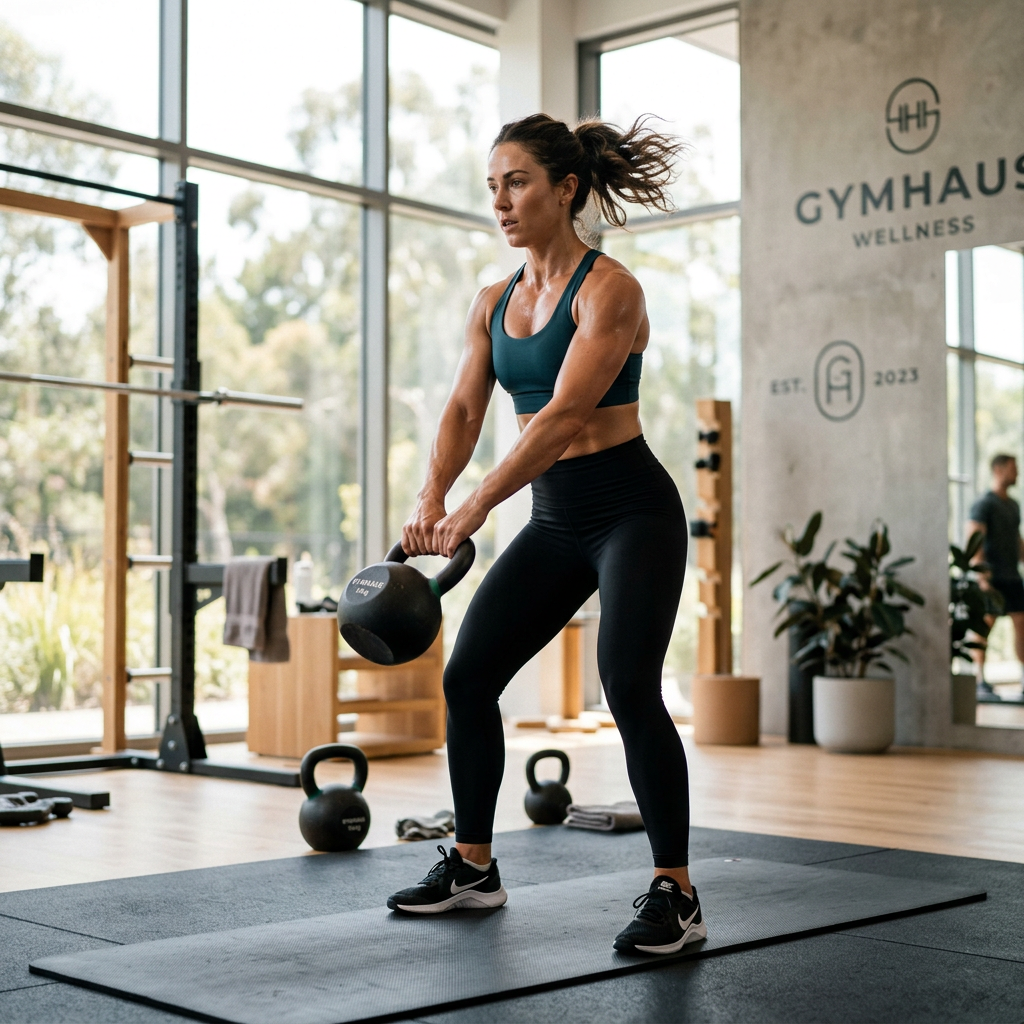
Equipment: a pair of dumbbells works, kettlebells work, even a heavy bag of groceries in each hand works. The weight matters more than the implement.
2. Dead hangs
Hang from a pull-up bar. Don't pull up. Just hang.
Why it works: dead hangs build supporting grip endurance — the ability to hold position against gravity for sustained periods — while simultaneously decompressing the spine and stretching the lats and shoulders.
Protocol: jump up, grab a pull-up bar with both hands (overhand, shoulder-width or slightly wider), hang. Try to hold for 30 seconds. Build to 60 seconds. Then 90 seconds. Then add weight via a dipping belt.
Frequency: 3x per week, 2–3 hangs per session. Free, joint-friendly, profoundly underrated.
3. Heavy rows (or deadlifts, when available)
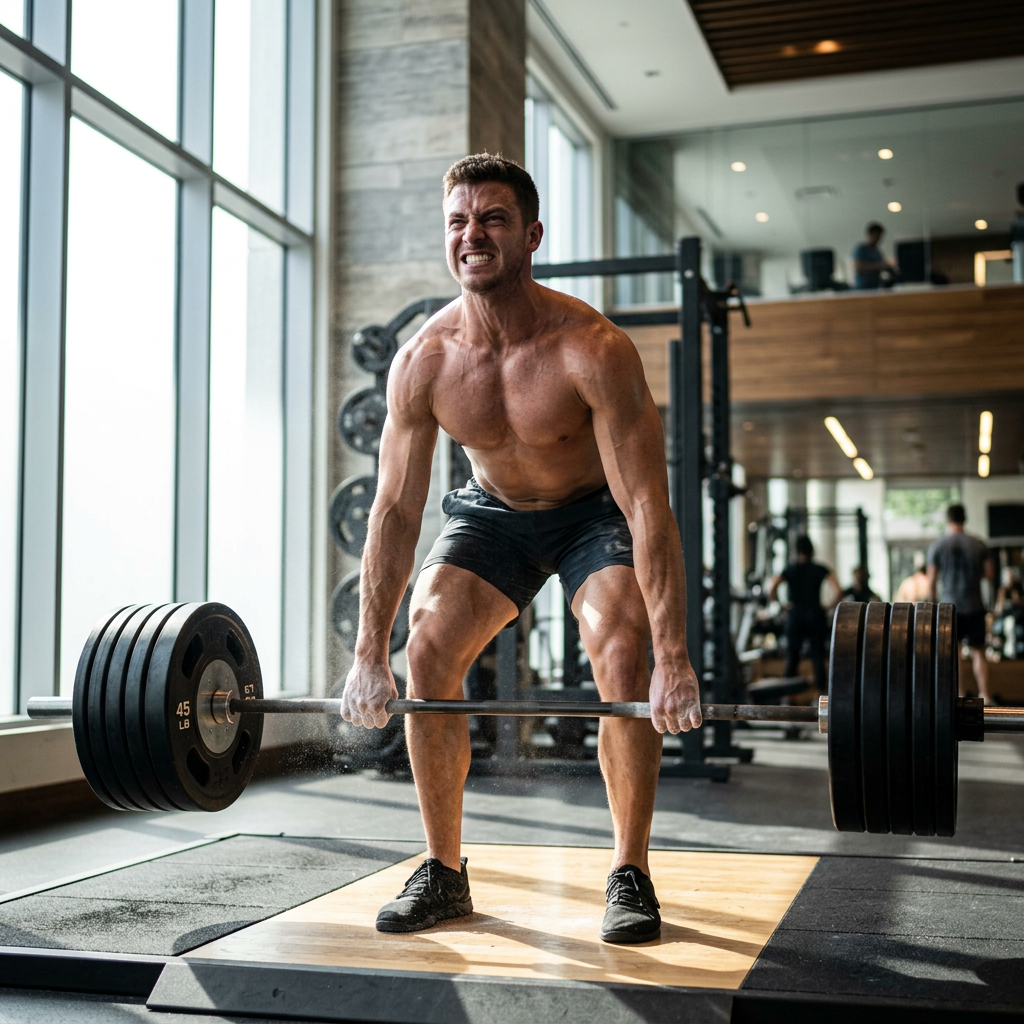
Rows and deadlifts build grip as a side effect of pulling heavy weight. The bar doesn't move if your grip fails — so a strong pull requires a strong grip.
Why it works: this is grip training as the byproduct of compound resistance training. It builds enormous grip strength quickly because you're forced to hold onto progressively heavier weight for longer.
Protocol: include heavy dumbbell rows, barbell rows, trap-bar deadlifts, or conventional deadlifts in your training 2x per week. Pick a weight you'd fail at rep 8. Don't use straps for your first set — you want your grip working.
For non-lifters: even doing 30 seconds of "hang from one arm with a kettlebell" once per side builds meaningful grip if you're starting from a low base.
What this isn't.
- A standalone fitness program. Strong grip with no overall conditioning is unusual and not the goal. The grip is the indicator; full-body resistance training is the program.
- A reason to neglect cardio. Grip strength correlates with longevity but doesn't replace cardiovascular fitness. The 3x-per-week resistance workout plus 7,000 daily steps is the foundation.
- A fix-in-isolation move. Grip improves alongside everything else when you train consistently. It's a signal of broader fitness, not a separable lever.
How this fits the bigger picture.
Patients who pair these three exercises with the 3x-per-week resistance template, the 7,000-step daily target, and good protein intake from the 4-rule nutrition framework — generally see grip strength improve measurably within 8–12 weeks. The whole-body benefits follow on the same timeline.
If you're on TRT or HRT, the protocols often pair beautifully with this kind of training — testosterone and estradiol both support the recovery from heavy lifting that builds grip and full-body strength most effectively.
The bottom line.
Grip strength is one of the cleanest biomarkers of how you're aging — easy to measure, hard to fake, predictive across populations. Three simple, equipment-light exercises (farmer's carries, dead hangs, heavy rows) build it efficiently as a side effect of broader strength training.
Track yours every 3 months. Train consistently. The number will tell you whether what you're doing is actually working at a level the scale and the mirror miss.
The single physical metric most predictive of longevity is also one of the easiest to train. Pick the three exercises that build it. Track the number. Don't overthink it.
Sources: The Lancet PURE study on grip strength and mortality; BMJ 2018 UK Biobank analysis of grip strength and disease risk.
Real protocols, built around your bloodwork.
DirectCare AI builds hormone, weight-loss, and longevity protocols designed to layer on top of the training and habit foundation that actually moves outcomes — including the markers that quietly predict how long you'll live.
See my numbers →Editorial disclosure: This article is for informational purposes only and does not constitute medical advice. All treatments at DirectCare AI are prescribed by US-licensed clinicians based on individual medical evaluation. Compounded medications are not FDA-approved and are not reviewed by the FDA for safety, effectiveness, or quality. Always consult a US-licensed clinician before starting or changing any therapy.