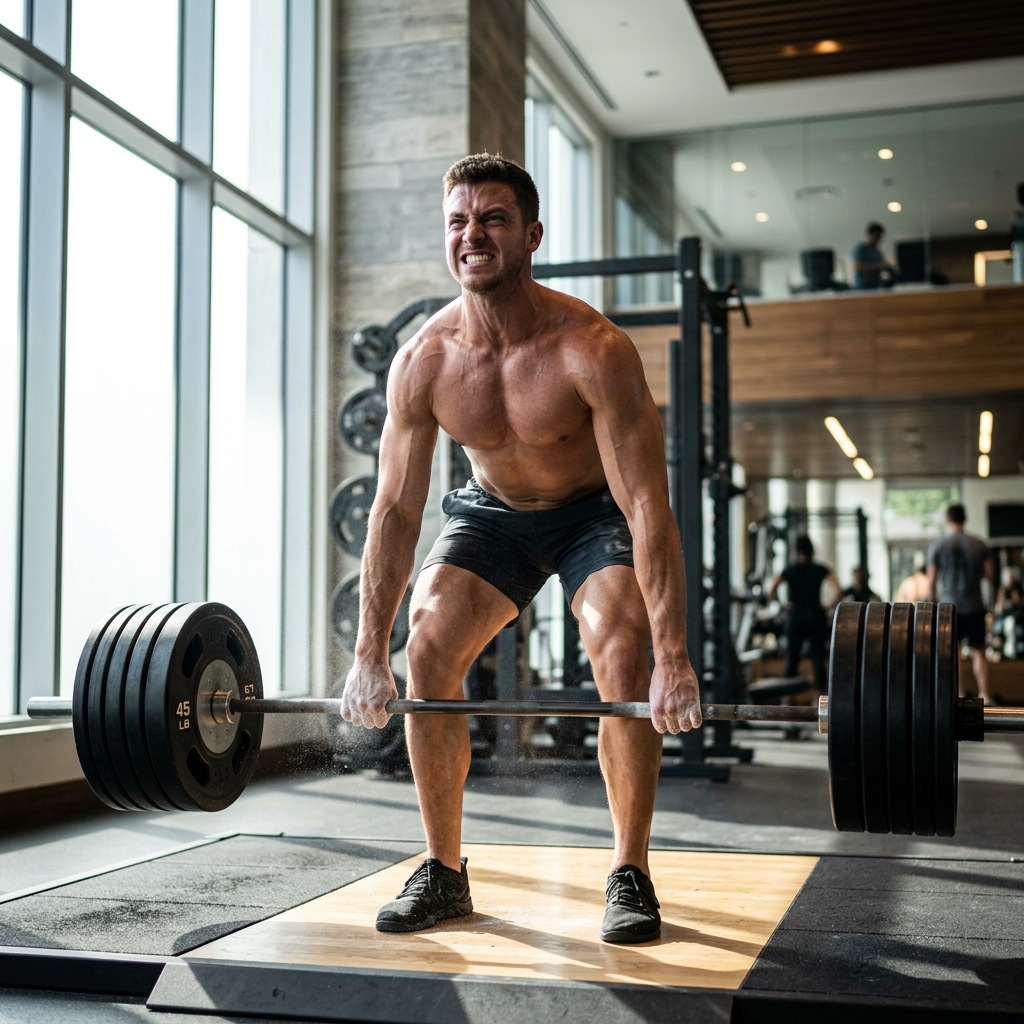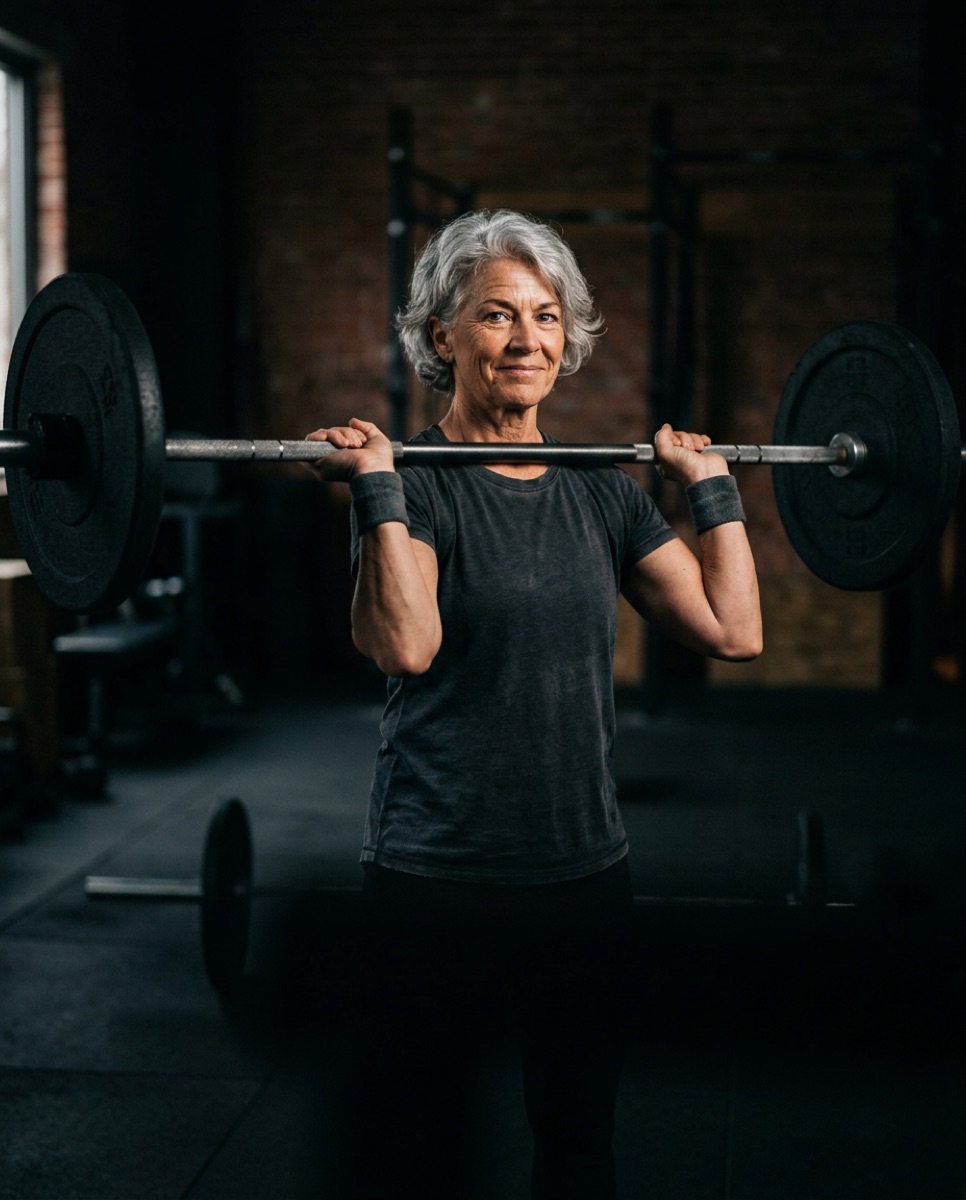
In the LIFTMOR randomized trial, postmenopausal women with low bone mass who did 30 minutes of supervised high-intensity lifting and impact training twice a week for eight months gained 2.9% in lumbar spine bone density. Women in a low-intensity home exercise group lost 1.2%.
Bone loss speeds up in the years around menopause as estrogen falls. For a long time, women with low bone density were steered toward gentle exercise and away from heavy weights, out of concern about fractures. An Australian trial called LIFTMOR tested whether that caution was costing them bone.
What the trial did
Researchers enrolled 101 postmenopausal women, average age 65, all with low bone mass. They were randomly assigned to one of two programs for eight months:
- Lifting group: supervised sessions twice a week, 30 minutes each. Deadlifts, overhead presses and back squats at heavy loads, five sets of five repetitions, plus a jumping drill for impact.
- Comparison group: a low-intensity home program of light exercise and stretching, also twice a week.
What it found
- Lumbar spine bone density rose 2.9% in the lifting group and fell 1.2% in the comparison group
- Bone density at the femoral neck, part of the hip, held steady in the lifting group and fell 1.9% in the comparison group
- The lifting group improved on every test of physical function, including leg and back strength and the timed up-and-go test
- Attendance was 92%, and one minor injury was reported, a mild lower back spasm
Why heavy loads
Bone responds to strain. Walking and light weights place only modest loads on the spine and hip. Heavy compound lifts and controlled impact apply much larger forces, and those appear to be the signal bone needs to rebuild.
How to use this
- If you have osteopenia or osteoporosis, ask your clinician whether a supervised strength program is appropriate for you
- Work with a physical therapist or a trainer experienced with low bone density
- Expect several weeks of learning technique at light loads before weights go up
- Exercise is one part of bone health. Protein, calcium, vitamin D and, for some women, medication or hormone therapy also matter
Our guides to lifting through perimenopause and hormone therapy and bone density cover the earlier years and the hormonal side.
This article is educational and is not medical advice. Talk with a licensed clinician about your own health.
References
- Watson SL, Weeks BK, Weis LJ, et al. High-Intensity Resistance and Impact Training Improves Bone Mineral Density and Physical Function in Postmenopausal Women With Osteopenia and Osteoporosis: The LIFTMOR Randomized Controlled Trial. J Bone Miner Res. 2018;33(2):211-220. Source
Personalized telehealth, on your terms.
A US-licensed clinician reviews your bloodwork and builds a protocol around your real numbers. Labs included.
Get started →Editorial disclosure: This article is for informational purposes only and does not constitute medical advice. All treatments at DirectCare AI are prescribed by US-licensed clinicians based on individual medical evaluation. Compounded medications are not FDA-approved and are not reviewed by the FDA for safety, effectiveness, or quality. Always consult a US-licensed clinician before starting or changing any therapy.