Blog
Sildenafil vs. Tadalafil: How to Pick the Right ED Med
Sildenafil is the sprinter, tadalafil is the marathoner. Here's how to choose the PDE5 inhibitor that actually fits your relationship, schedule, and side-effect tolerance.
Read the post →Sildenafil is the sprinter, tadalafil is the marathoner. Here's how to choose the PDE5 inhibitor that actually fits your relationship, schedule, and side-effect tolerance.
Read the post →
Sildenafil is the sprinter, tadalafil is the marathoner. Here's how to choose the PDE5 inhibitor that actually fits your relationship, schedule, and side-effect tolerance.
Read the post →Micronized progesterone and synthetic progestins behave differently in the breast and brain. Here's the trial evidence, in plain English.
Read the post →
Both forms deliver real magnesium with very different downstream behavior. How a clinician decides between glycinate and citrate based on your labs.
Read the post →

Testosterone therapy suppresses sperm production in most men. Here's how hCG, clomiphene, and sperm banking preserve fertility on TRT — and what recovery actually looks like.
Read the post →
Most GLP-1 nausea comes from titrating too fast, not from the drug itself. Here's how to escalate semaglutide or tirzepatide without losing a month to the couch.
Read the post →
The 1,000 mg fish oil softgel on your counter is likely underdosed. Here's the EPA/DHA range that actually moves inflammation markers — and how to verify it worked.
Read the post →
Your annual physical probably checks cholesterol and glucose. Here are the 10 blood biomarkers that actually predict longevity — and the ones most primary care panels quietly skip.
Read the post →
Female-pattern hair loss is a hormonal signal, not just a genetic one. Here's the exact lab panel worth running before starting minoxidil, spironolactone, or finasteride.
Read the post →
A clinician-built 20-minute salmon and asparagus sheet-pan dinner — dialed to the EPA+DHA omega-3 dose that actually moves your labs.
Read the post →
The rep ranges, weekly split, and recovery rules that actually work when estrogen is fluctuating and recovery is slower than it used to be.
Read the post →Micronized progesterone and synthetic progestins share one job — protecting the uterus — but they behave very differently in breast tissue and the brain. Here's the clinical read.
Read the post →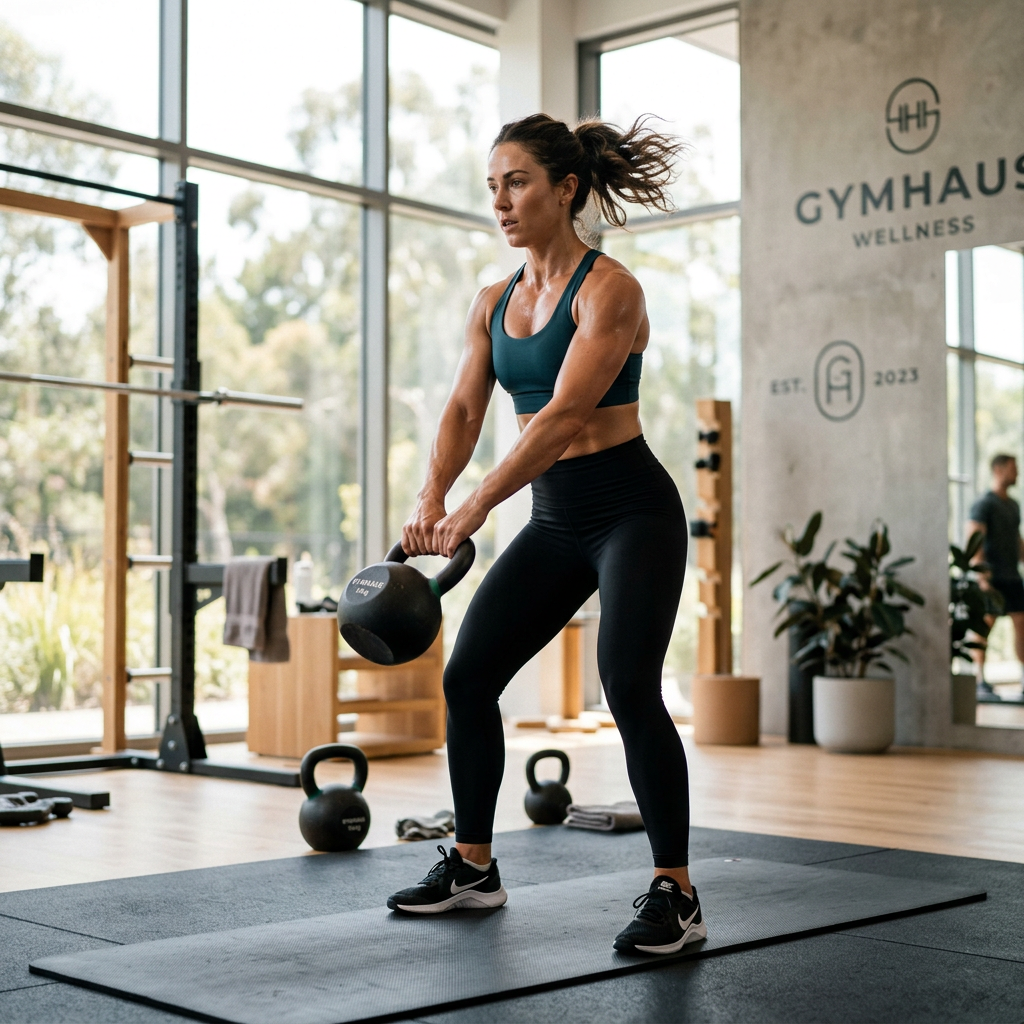
Two compound lifts, three days a week, 30 minutes per session. Here's the minimum effective dose to preserve strength and muscle when your schedule falls apart.
Read the post →
Head-to-head studies show subcutaneous testosterone delivers steadier levels than intramuscular injections at the same dose — with less pain and comparable efficacy. Here's what the PK data actually says.
Read the post →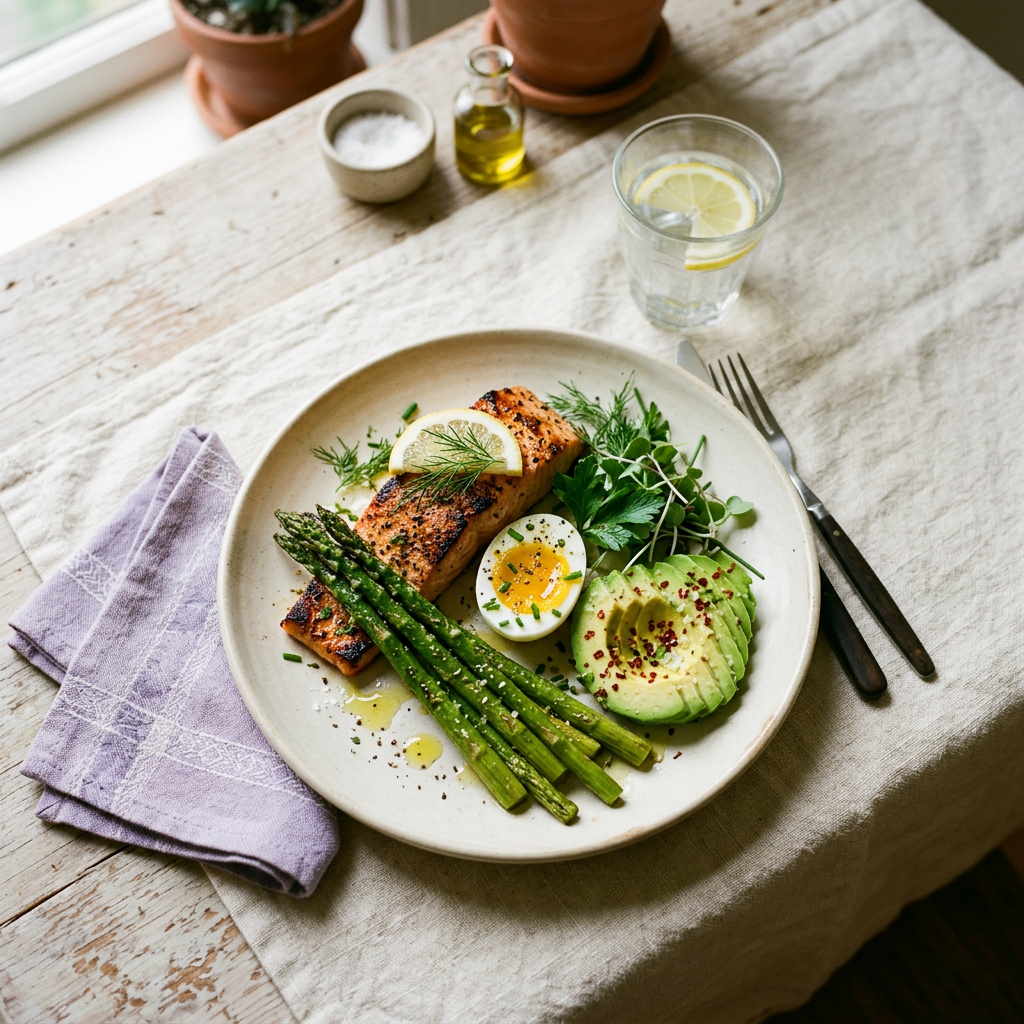
GLP-1s work — but without protein and lifting, up to 40% of the weight you lose can be lean mass. Here's the muscle-preservation protocol that actually matters.
Read the post →Three magnesium forms, three different jobs. Here's how to choose glycinate, citrate, or threonate based on what you actually need — sleep, digestion, or cognition.
Read the post →
Oral and topical finasteride both suppress scalp DHT, but they differ in systemic exposure and side-effect profile. Here's how to match the delivery to your tolerance.
Read the post →
Injectable testosterone predictably raises hematocrit. Here's the threshold that matters, why it happens, and how often donating blood actually helps.
Read the post →Plateaus aren't proof you've lost willpower. They're proof your endocrine system is doing exactly what it evolved to do — and there are specific ways to work around it.
Read the post →
Fatigue, hair shedding, and brain fog in women 35–55 are routinely blamed on hormones when the real driver is low ferritin. Here's how to read the iron panel that actually finds it.
Read the post →
Thirty grams of protein and eight grams of fiber before 9 a.m. — three real rotations that fit a busy morning without the food-blog theatrics.
Read the post →Dutasteride suppresses DHT more completely than finasteride — sometimes 90%+ vs ~70%. That extra suppression is a tool, not a default. Here's when to reach for it.
Read the post →
ED frequently precedes cardiac events by years because penile arteries narrow first. Here's the lab panel that separates a vascular problem from a hormonal one.
Read the post →LDL-C tells you how much cholesterol is in your blood. ApoB tells you how many atherogenic particles are actually driving plaque. Here's why the difference matters.
Read the post →
The bloodwork tells you which phase you're in — and which phase you're in determines what HRT should actually look like. Here's how to read the panel.
Read the post →
Perimenopause bumps your protein target higher, not lower. Here's a lentil, tofu, and tempeh rotation that hits it — with real gram counts and three recipes.
Read the post →A bar isn't lunch. Here's why 30 grams of protein at midday changes appetite, glucose, and lean mass — and how to hit the number without cooking.
Read the post →GLP-1s work better when you feed them fiber. Here's why 25-35g daily keeps appetite suppression sustainable — and how to actually hit it without a supplement crutch.
Read the post →Zone 2 is the low-intensity aerobic sweet spot where mitochondria adapt fastest. Here's how to find yours after 40 — with or without a lab.
Read the post →Magnesium is the mineral most Americans quietly underdose. Here's when food fixes it, and when a supplement is the smarter move.
Read the post →Total testosterone gets the headlines. Free testosterone does the work. Here's how to read both — and why SHBG is the variable most men miss.
Read the post →
Rucking pairs cardio and load-bearing strength in a single low-impact session. Here's how to program it — weight, distance, progression, and warm-up.
Read the post →The boxed thyroid warning on GLP-1s scares patients more than it should — and misses the real monitoring questions. Here's what actually matters.
Read the post →Estradiol is your skeleton's loudest signal to keep bone. Here's how HRT protects bone density in midlife and reduces fracture risk decades later.
Read the post →A clinician's breakdown of what each produce color actually delivers — carotenoids, anthocyanins, glucosinolates — and the daily targets that move real biomarkers.
Read the post →Five minutes of targeted mobility before you lift or run isn't ceremonial — it changes tissue temperature, joint range, and neural drive. Here's the sequence worth doing.
Read the post →Most adults who supplement vitamin D still test deficient. Here's the D3 + K2 dosing logic, the blood-level target range, and what to actually retest.
Read the post →Testosterone is part of female physiology, but most HRT protocols still ignore it. Here's the evidence, the trade-offs, and what a thorough workup looks like.
Read the post →Fasted coffee stacks caffeine on top of your natural cortisol peak. Here's what to drink in the first 30–60 minutes instead — and when coffee actually works in your favor.
Read the post →Matched for energy expenditure, walking and running cut cardiovascular risk by similar margins. The question isn't which is better — it's which one you'll actually do four days a week.
Read the post →Testosterone, estradiol, SHBG, LH, FSH, thyroid, cortisol — what each marker on a hormone panel actually means, and where the clinical cutoffs sit.
Read the post →
The most common lab change on injectable testosterone isn't your testosterone level — it's your hematocrit climbing. Left unmonitored it raises clot risk. Managed correctly, it's a non-issue. Here's the clinician's view.
Read the post →Every diet that's ever failed has a name in metabolism research: rebound to setpoint. GLP-1s are the first class of drugs with serious published evidence they may actually reset that setpoint — and the implication for long-term treatment is
Read the post →Low libido in men gets blamed on testosterone, but stress, sleep, SSRIs, and metabolic disease drive just as many cases. Here's how to tell them apart.
Read the post →A $25 dermaroller, used correctly, roughly doubles the regrowth produced by topical minoxidil alone. The mechanism is real, the published evidence is solid, and most patients are doing it wrong.
Read the post →Same molecule, four delivery systems, four very different real-world experiences. Cardiovascular risk, dose stability, convenience, and cost vary substantially between them. The clinician's-eye view on which fits which patient.
Read the post →
Chicken thighs, lemon, garlic, oregano. Herbed quinoa cooked in the same pan. 38 grams of protein, 9 grams of fiber, 30 minutes start to plate. The Saturday-night dinner you'll actually want to repeat on Tuesday.
Read the post →TikTok says berberine is a natural GLP-1. It isn't. But it does meaningfully lower blood glucose and modestly improve metabolic markers in some patients. Here's the honest version — what it actually does, what it doesn't, and where it fits.
Read the post →Over-the-counter CGM access changed the metabolic conversation. The question shifted from 'should I get one' to 'is the data actually useful, or is it making me anxious about meals that were fine?' Here's the clinician's view.
Read the post →Grip strength is one of the cleanest biomarkers of all-cause mortality in adults. The Lancet's PURE study, with 140,000 participants across 17 countries, found it outperforms blood pressure as a predictor. The good news: it's also one of th
Read the post →Low testosterone makes sleep apnea worse. Untreated sleep apnea drives testosterone down. Patients can spend years on testosterone protocols that aren't working — because the actual root cause is upstream in the airway.
Read the post →Same active ingredient. Same mechanism. Often a fraction of the cost. The real differences between compounded semaglutide/tirzepatide and the branded Wegovy/Zepbound versions are mostly about supply, dose flexibility, and oversight — not wh
Read the post →
PDE5 inhibitors fix the plumbing. PT-141 fixes the signal. A melanocortin agonist that drives desire — not just mechanical response — and pairs differently with the protocols clinics already prescribe.
Read the post →Salmon, cauliflower, chickpeas, harissa. One pan. 35 minutes. 36 grams of protein. The Saturday-night dinner that feels like more effort than it actually was.
Read the post →Finasteride is the gold-standard hair-loss drug. Dutasteride is the more aggressive cousin — same mechanism, more enzyme suppression, better regrowth results in the patients who don't respond fully to finasteride. The clinical case for step
Read the post →Estradiol gets the headlines. Progesterone gets the prescription. DHEA — the adrenal precursor that drives roughly half of a woman's sex hormone production by her 50s — almost never gets mentioned. Here's why it should.
Read the post →Modern cardiology has shifted from LDL cholesterol to apolipoprotein B (ApoB) as the cleaner measure of cardiovascular risk. Most annual physicals still order the wrong test — and read it wrong when they do.
Read the post →The cleanest, cheapest, best-studied supplement on the market is also the one most women have written off as a bodybuilding drug. The published evidence in cognition, bone density, and healthy aging says they shouldn't.
Read the post →
Resting heart rate is the simple metric. HRV is the smarter one. Why this overnight number is the cleanest measure of your nervous system's recovery state — and the four levers that move it most.
Read the post →Most men on testosterone therapy don't need anastrozole — and over-suppression of estradiol causes more symptoms than the high estradiol clinics were trying to fix. The clinical case for restraint.
Read the post →The STEP-4 trial showed roughly two-thirds of weight lost on a GLP-1 comes back within a year of stopping. The maintenance protocol that prevents it isn't quitting cold turkey — and isn't staying on full dose either.
Read the post →One pan, 25 minutes, 38 grams of protein per plate. A clinician-built weeknight dinner that scales for one or feeds a family of four — no specialty ingredients required.
Read the post →Around week 2 to 6 of starting minoxidil, a meaningful percentage of patients shed more hair than they've ever lost — and most of them quit. Here's the biology of why that shed is the protocol working, not failing.
Read the post →
Half of postmenopausal women have symptoms of genitourinary syndrome of menopause. Only ~7% are on the local protocol that resolves it. The math behind that gap — and the science that closes it.
Read the post →On-demand sildenafil works. So does 50-100 mg tadalafil as needed. But 2.5-5 mg of daily tadalafil is a different mode of therapy — and for a meaningful slice of patients, it's the right one.
Read the post →Both forms deliver real magnesium with very different downstream behavior. How a clinician decides between glycinate and citrate based on your labs.
Read the post →Explains why morning erections are a free clinical signal for low testosterone, vascular health, and sleep quality — and what a clinician reads from their frequency.
Read the post →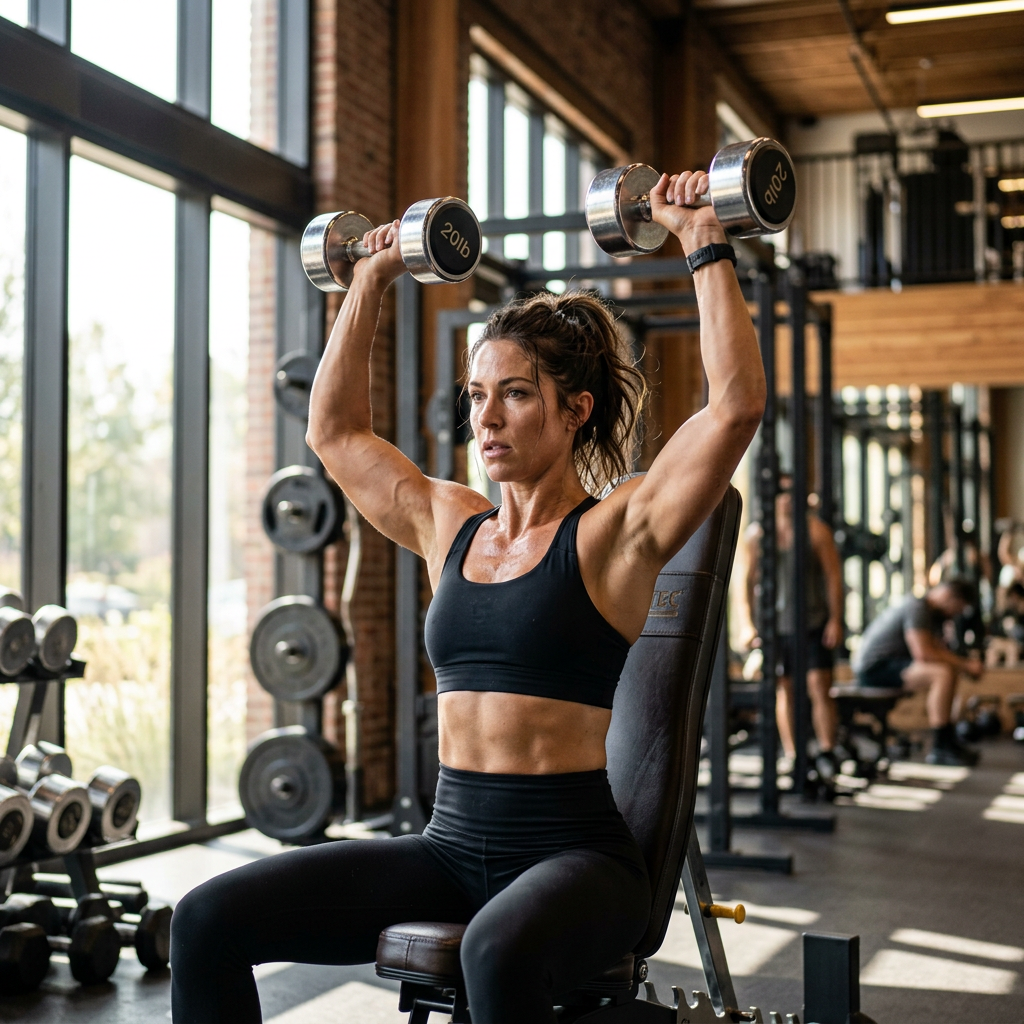
Outlines the three-day-per-week resistance training protocol that preserves muscle during GLP-1 weight loss: six compound lifts, 6-12 reps, two work sets each.
Read the post →Walks through a 30-minute beginner home workout: three rounds of eight bodyweight moves (squats, push-ups, glute bridges, lunges, planks) paced by RPE — no equipment.
Read the post →Explains why 7,000 daily steps is the most evidence-backed cardio target for adults — and why higher counts show diminishing returns in the published literature.
Read the post →Recipe for a 5-minute pantry lunch bowl: canned chickpeas + tuna + olive oil + lemon. Hits 35g protein and 14g fiber with no stove or microwave.
Read the post →Recipe for a 40g-protein breakfast smoothie: whey, Greek yogurt, frozen banana, peanut butter, oats, milk. Blends in 3 minutes from a Sunday-night freezer prep.
Read the post →Recipe for a 30-minute sheet-pan Mediterranean salmon bowl with 38g protein, 10g fiber, and 2.4g omega-3s — built for the smaller appetite a GLP-1 leaves you with.
Read the post →Outlines the 4-rule eating framework for GLP-1 patients: 1g protein per pound goal weight, fiber > 25g/day, hydration > 80oz, no liquid calories.
Read the post →Compares semaglutide vs. tirzepatide for weight loss: tirzepatide hits two receptors (GIP + GLP-1) and drops 15-22% body weight vs 12-15% for semaglutide.
Read the post →Explains what happens month-by-month on HRT after 40: hot flashes ease in 2-4 weeks, sleep and mood improve at 4-8 weeks, body composition and libido shift at 3-6 months.
Read the post →Compares the three testosterone protocols: injectable testosterone cypionate, oral testosterone undecanoate, and enclomiphene — and which bloodwork pattern fits each.
Read the post →Explains why testosterone must be tested before 10am: levels can drop 25-30% from 7am to noon, enough to flip a normal reading into a low-T diagnosis or vice versa.
Read the post →Explains why oral micronized progesterone for menopause must be taken at bedtime: timing drives the sedating effect more than dose, and morning dosing wastes the benefit.
Read the post →Compares sildenafil (Viagra) vs. tadalafil (Cialis): sildenafil kicks in 30-60 min and lasts 4-6 hours, tadalafil takes 30-60 min and lasts 24-36 hours — daily dosing changes the math.
Read the post →Explains why women's testosterone crashes in the 40s and what to test: total testosterone, free testosterone, SHBG — and what a 0.5-1mg/day topical testosterone protocol does.
Read the post →Explains how topical finasteride delivers oral-finasteride hair-regrowth results with ~80% less systemic exposure — and the side effects (libido, mood) it reduces.
Read the post →Explains the hormonal panel for female-pattern hair loss: ferritin (>70 target), TSH, free T3/T4, total testosterone, DHEA-S, estradiol, prolactin — and what each finding means.
Read the post →Recipe for sheet-pan miso-glazed salmon with charred bok choy and brown rice: 25 minutes, 35g protein, omega-3 target hit in one pan.
Read the post →Walks through week-by-week expectations on the first month of a GLP-1: nausea and food-noise drop in week 1-2, fatigue peaks week 2-3, energy returns by week 4.
Read the post →Compares whole eggs vs. egg whites: whole eggs win for choline, B12, and selenium; whites win when you're hitting 1g/lb protein on a calorie ceiling.
Read the post →Explains how to lose fat without losing muscle on GLP-1s: 1g protein per pound goal weight, resistance training 3x/week, and a 10-15% calorie deficit (not 30%).
Read the post →Recipe for 5-minute overnight oats with 28g protein, 10g fiber, and 4mg iron per jar: rolled oats, Greek yogurt, chia, pumpkin seeds, milk, fortified cereal.
Read the post →Lists the 12 biomarkers a clinician opens first on a hormone panel: total/free testosterone, SHBG, estradiol, DHEA-S, LH, FSH, TSH, free T3/T4, fasting insulin, ApoB, hs-CRP.
Read the post →Explains the two most commonly under-dosed supplements: magnesium glycinate (300-400mg/day for sleep + recovery) and vitamin D3 (2,000-5,000 IU/day to hit 40-60 ng/mL).
Read the post →Recipe for meal-prep Greek chicken souvlaki bowls: 4 servings, 35g protein each, marinated chicken thighs, lemon-oregano dressing, tzatziki, cucumber-tomato salad.
Read the post →Explains why the 'anabolic window' is mostly a myth: total daily protein matters far more than post-workout timing as long as you hit 1g/lb goal weight across 4 meals.
Read the post →Recipe for 20-minute salmon tacos with cabbage slaw: 32g protein per serving, omega-3 target, the lime-yogurt sauce that makes salmon work in a taco.
Read the post →Lists the foods most useful in perimenopause: flax (1-2 tbsp/day for lignans), soy (15-25g protein/day for isoflavones), fatty fish (omega-3), cruciferous vegetables (DIM).
Read the post →Recipe for a 5-minute cottage cheese bowl with 28g protein: full-fat cottage cheese, berries, walnuts, honey, hemp seeds — the snack that beats a protein bar nutritionally.
Read the post →Recipe for a 30-minute Mediterranean lentil soup: 22g protein, 16g fiber per bowl, six pantry ingredients, the kind of weeknight dinner that hits 1,000+ recipes on Pinterest.
Read the post →Explains why most adults eat 12-15g fiber when the target is 30-40g — and which foods (legumes, oats, chia, berries) move the needle fastest without supplementing.
Read the post →Recipe for sheet-pan chicken thighs with roasted vegetables: 30 minutes, 38g protein per serving, four-component meal prep with one tray.
Read the post →Recipe for a 5-minute Greek yogurt breakfast bowl with 40g protein: full-fat Greek yogurt, whey, berries, walnuts, chia, honey — the bowl that replaces a smoothie.
Read the post →Testosterone therapy suppresses sperm production in most men. Here's how hCG, clomiphene, and sperm banking preserve fertility on TRT — and what recovery actually looks like.
Read the post →Most GLP-1 nausea comes from titrating too fast, not from the drug itself. Here's how to escalate semaglutide or tirzepatide without losing a month to the couch.
Read the post →The 1,000 mg fish oil softgel on your counter is likely underdosed. Here's the EPA/DHA range that actually moves inflammation markers — and how to verify it worked.
Read the post →Your annual physical probably checks cholesterol and glucose. Here are the 10 blood biomarkers that actually predict longevity — and the ones most primary care panels quietly skip.
Read the post →Female-pattern hair loss is a hormonal signal, not just a genetic one. Here's the exact lab panel worth running before starting minoxidil, spironolactone, or finasteride.
Read the post →A clinician-built 20-minute salmon and asparagus sheet-pan dinner — dialed to the EPA+DHA omega-3 dose that actually moves your labs.
Read the post →The rep ranges, weekly split, and recovery rules that actually work when estrogen is fluctuating and recovery is slower than it used to be.
Read the post →Micronized progesterone and synthetic progestins share one job — protecting the uterus — but they behave very differently in breast tissue and the brain. Here's the clinical read.
Read the post →Two compound lifts, three days a week, 30 minutes per session. Here's the minimum effective dose to preserve strength and muscle when your schedule falls apart.
Read the post →Head-to-head studies show subcutaneous testosterone delivers steadier levels than intramuscular injections at the same dose — with less pain and comparable efficacy. Here's what the PK data actually says.
Read the post →GLP-1s work — but without protein and lifting, up to 40% of the weight you lose can be lean mass. Here's the muscle-preservation protocol that actually matters.
Read the post →Three magnesium forms, three different jobs. Here's how to choose glycinate, citrate, or threonate based on what you actually need — sleep, digestion, or cognition.
Read the post →Oral and topical finasteride both suppress scalp DHT, but they differ in systemic exposure and side-effect profile. Here's how to match the delivery to your tolerance.
Read the post →Injectable testosterone predictably raises hematocrit. Here's the threshold that matters, why it happens, and how often donating blood actually helps.
Read the post →Plateaus aren't proof you've lost willpower. They're proof your endocrine system is doing exactly what it evolved to do — and there are specific ways to work around it.
Read the post →Fatigue, hair shedding, and brain fog in women 35–55 are routinely blamed on hormones when the real driver is low ferritin. Here's how to read the iron panel that actually finds it.
Read the post →Thirty grams of protein and eight grams of fiber before 9 a.m. — three real rotations that fit a busy morning without the food-blog theatrics.
Read the post →Dutasteride suppresses DHT more completely than finasteride — sometimes 90%+ vs ~70%. That extra suppression is a tool, not a default. Here's when to reach for it.
Read the post →ED frequently precedes cardiac events by years because penile arteries narrow first. Here's the lab panel that separates a vascular problem from a hormonal one.
Read the post →LDL-C tells you how much cholesterol is in your blood. ApoB tells you how many atherogenic particles are actually driving plaque. Here's why the difference matters.
Read the post →The bloodwork tells you which phase you're in — and which phase you're in determines what HRT should actually look like. Here's how to read the panel.
Read the post →Perimenopause bumps your protein target higher, not lower. Here's a lentil, tofu, and tempeh rotation that hits it — with real gram counts and three recipes.
Read the post →A bar isn't lunch. Here's why 30 grams of protein at midday changes appetite, glucose, and lean mass — and how to hit the number without cooking.
Read the post →GLP-1s work better when you feed them fiber. Here's why 25-35g daily keeps appetite suppression sustainable — and how to actually hit it without a supplement crutch.
Read the post →Zone 2 is the low-intensity aerobic sweet spot where mitochondria adapt fastest. Here's how to find yours after 40 — with or without a lab.
Read the post →Magnesium is the mineral most Americans quietly underdose. Here's when food fixes it, and when a supplement is the smarter move.
Read the post →Total testosterone gets the headlines. Free testosterone does the work. Here's how to read both — and why SHBG is the variable most men miss.
Read the post →Rucking pairs cardio and load-bearing strength in a single low-impact session. Here's how to program it — weight, distance, progression, and warm-up.
Read the post →The boxed thyroid warning on GLP-1s scares patients more than it should — and misses the real monitoring questions. Here's what actually matters.
Read the post →Estradiol is your skeleton's loudest signal to keep bone. Here's how HRT protects bone density in midlife and reduces fracture risk decades later.
Read the post →A clinician's breakdown of what each produce color actually delivers — carotenoids, anthocyanins, glucosinolates — and the daily targets that move real biomarkers.
Read the post →Five minutes of targeted mobility before you lift or run isn't ceremonial — it changes tissue temperature, joint range, and neural drive. Here's the sequence worth doing.
Read the post →Most adults who supplement vitamin D still test deficient. Here's the D3 + K2 dosing logic, the blood-level target range, and what to actually retest.
Read the post →Testosterone is part of female physiology, but most HRT protocols still ignore it. Here's the evidence, the trade-offs, and what a thorough workup looks like.
Read the post →Fasted coffee stacks caffeine on top of your natural cortisol peak. Here's what to drink in the first 30–60 minutes instead — and when coffee actually works in your favor.
Read the post →Matched for energy expenditure, walking and running cut cardiovascular risk by similar margins. The question isn't which is better — it's which one you'll actually do four days a week.
Read the post →Testosterone, estradiol, SHBG, LH, FSH, thyroid, cortisol — what each marker on a hormone panel actually means, and where the clinical cutoffs sit.
Read the post →The most common lab change on injectable testosterone isn't your testosterone level — it's your hematocrit climbing. Left unmonitored it raises clot risk. Managed correctly, it's a non-issue. Here's the clinician's view.
Read the post →Every diet that's ever failed has a name in metabolism research: rebound to setpoint. GLP-1s are the first class of drugs with serious published evidence they may actually reset that setpoint — and the implication for long-term treatment is
Read the post →Low libido in men gets blamed on testosterone, but stress, sleep, SSRIs, and metabolic disease drive just as many cases. Here's how to tell them apart.
Read the post →A $25 dermaroller, used correctly, roughly doubles the regrowth produced by topical minoxidil alone. The mechanism is real, the published evidence is solid, and most patients are doing it wrong.
Read the post →Same molecule, four delivery systems, four very different real-world experiences. Cardiovascular risk, dose stability, convenience, and cost vary substantially between them. The clinician's-eye view on which fits which patient.
Read the post →Chicken thighs, lemon, garlic, oregano. Herbed quinoa cooked in the same pan. 38 grams of protein, 9 grams of fiber, 30 minutes start to plate. The Saturday-night dinner you'll actually want to repeat on Tuesday.
Read the post →TikTok says berberine is a natural GLP-1. It isn't. But it does meaningfully lower blood glucose and modestly improve metabolic markers in some patients. Here's the honest version — what it actually does, what it doesn't, and where it fits.
Read the post →Over-the-counter CGM access changed the metabolic conversation. The question shifted from 'should I get one' to 'is the data actually useful, or is it making me anxious about meals that were fine?' Here's the clinician's view.
Read the post →Grip strength is one of the cleanest biomarkers of all-cause mortality in adults. The Lancet's PURE study, with 140,000 participants across 17 countries, found it outperforms blood pressure as a predictor. The good news: it's also one of th
Read the post →Low testosterone makes sleep apnea worse. Untreated sleep apnea drives testosterone down. Patients can spend years on testosterone protocols that aren't working — because the actual root cause is upstream in the airway.
Read the post →Same active ingredient. Same mechanism. Often a fraction of the cost. The real differences between compounded semaglutide/tirzepatide and the branded Wegovy/Zepbound versions are mostly about supply, dose flexibility, and oversight — not wh
Read the post →PDE5 inhibitors fix the plumbing. PT-141 fixes the signal. A melanocortin agonist that drives desire — not just mechanical response — and pairs differently with the protocols clinics already prescribe.
Read the post →Salmon, cauliflower, chickpeas, harissa. One pan. 35 minutes. 36 grams of protein. The Saturday-night dinner that feels like more effort than it actually was.
Read the post →Finasteride is the gold-standard hair-loss drug. Dutasteride is the more aggressive cousin — same mechanism, more enzyme suppression, better regrowth results in the patients who don't respond fully to finasteride. The clinical case for step
Read the post →Estradiol gets the headlines. Progesterone gets the prescription. DHEA — the adrenal precursor that drives roughly half of a woman's sex hormone production by her 50s — almost never gets mentioned. Here's why it should.
Read the post →Modern cardiology has shifted from LDL cholesterol to apolipoprotein B (ApoB) as the cleaner measure of cardiovascular risk. Most annual physicals still order the wrong test — and read it wrong when they do.
Read the post →The cleanest, cheapest, best-studied supplement on the market is also the one most women have written off as a bodybuilding drug. The published evidence in cognition, bone density, and healthy aging says they shouldn't.
Read the post →Resting heart rate is the simple metric. HRV is the smarter one. Why this overnight number is the cleanest measure of your nervous system's recovery state — and the four levers that move it most.
Read the post →Most men on testosterone therapy don't need anastrozole — and over-suppression of estradiol causes more symptoms than the high estradiol clinics were trying to fix. The clinical case for restraint.
Read the post →The STEP-4 trial showed roughly two-thirds of weight lost on a GLP-1 comes back within a year of stopping. The maintenance protocol that prevents it isn't quitting cold turkey — and isn't staying on full dose either.
Read the post →One pan, 25 minutes, 38 grams of protein per plate. A clinician-built weeknight dinner that scales for one or feeds a family of four — no specialty ingredients required.
Read the post →Around week 2 to 6 of starting minoxidil, a meaningful percentage of patients shed more hair than they've ever lost — and most of them quit. Here's the biology of why that shed is the protocol working, not failing.
Read the post →Half of postmenopausal women have symptoms of genitourinary syndrome of menopause. Only ~7% are on the local protocol that resolves it. The math behind that gap — and the science that closes it.
Read the post →On-demand sildenafil works. So does 50-100 mg tadalafil as needed. But 2.5-5 mg of daily tadalafil is a different mode of therapy — and for a meaningful slice of patients, it's the right one.
Read the post →Both forms deliver real magnesium with very different downstream behavior. How a clinician decides between glycinate and citrate based on your labs.
Read the post →Explains why morning erections are a free clinical signal for low testosterone, vascular health, and sleep quality — and what a clinician reads from their frequency.
Read the post →Outlines the three-day-per-week resistance training protocol that preserves muscle during GLP-1 weight loss: six compound lifts, 6-12 reps, two work sets each.
Read the post →Walks through a 30-minute beginner home workout: three rounds of eight bodyweight moves (squats, push-ups, glute bridges, lunges, planks) paced by RPE — no equipment.
Read the post →Explains why 7,000 daily steps is the most evidence-backed cardio target for adults — and why higher counts show diminishing returns in the published literature.
Read the post →Recipe for a 5-minute pantry lunch bowl: canned chickpeas + tuna + olive oil + lemon. Hits 35g protein and 14g fiber with no stove or microwave.
Read the post →Recipe for a 40g-protein breakfast smoothie: whey, Greek yogurt, frozen banana, peanut butter, oats, milk. Blends in 3 minutes from a Sunday-night freezer prep.
Read the post →Recipe for a 30-minute sheet-pan Mediterranean salmon bowl with 38g protein, 10g fiber, and 2.4g omega-3s — built for the smaller appetite a GLP-1 leaves you with.
Read the post →Outlines the 4-rule eating framework for GLP-1 patients: 1g protein per pound goal weight, fiber > 25g/day, hydration > 80oz, no liquid calories.
Read the post →Compares semaglutide vs. tirzepatide for weight loss: tirzepatide hits two receptors (GIP + GLP-1) and drops 15-22% body weight vs 12-15% for semaglutide.
Read the post →Explains what happens month-by-month on HRT after 40: hot flashes ease in 2-4 weeks, sleep and mood improve at 4-8 weeks, body composition and libido shift at 3-6 months.
Read the post →Compares the three testosterone protocols: injectable testosterone cypionate, oral testosterone undecanoate, and enclomiphene — and which bloodwork pattern fits each.
Read the post →Explains why testosterone must be tested before 10am: levels can drop 25-30% from 7am to noon, enough to flip a normal reading into a low-T diagnosis or vice versa.
Read the post →Explains why oral micronized progesterone for menopause must be taken at bedtime: timing drives the sedating effect more than dose, and morning dosing wastes the benefit.
Read the post →Compares sildenafil (Viagra) vs. tadalafil (Cialis): sildenafil kicks in 30-60 min and lasts 4-6 hours, tadalafil takes 30-60 min and lasts 24-36 hours — daily dosing changes the math.
Read the post →Explains why women's testosterone crashes in the 40s and what to test: total testosterone, free testosterone, SHBG — and what a 0.5-1mg/day topical testosterone protocol does.
Read the post →Explains how topical finasteride delivers oral-finasteride hair-regrowth results with ~80% less systemic exposure — and the side effects (libido, mood) it reduces.
Read the post →Explains the hormonal panel for female-pattern hair loss: ferritin (>70 target), TSH, free T3/T4, total testosterone, DHEA-S, estradiol, prolactin — and what each finding means.
Read the post →Recipe for sheet-pan miso-glazed salmon with charred bok choy and brown rice: 25 minutes, 35g protein, omega-3 target hit in one pan.
Read the post →Walks through week-by-week expectations on the first month of a GLP-1: nausea and food-noise drop in week 1-2, fatigue peaks week 2-3, energy returns by week 4.
Read the post →Compares whole eggs vs. egg whites: whole eggs win for choline, B12, and selenium; whites win when you're hitting 1g/lb protein on a calorie ceiling.
Read the post →Explains how to lose fat without losing muscle on GLP-1s: 1g protein per pound goal weight, resistance training 3x/week, and a 10-15% calorie deficit (not 30%).
Read the post →Recipe for 5-minute overnight oats with 28g protein, 10g fiber, and 4mg iron per jar: rolled oats, Greek yogurt, chia, pumpkin seeds, milk, fortified cereal.
Read the post →Lists the 12 biomarkers a clinician opens first on a hormone panel: total/free testosterone, SHBG, estradiol, DHEA-S, LH, FSH, TSH, free T3/T4, fasting insulin, ApoB, hs-CRP.
Read the post →Explains the two most commonly under-dosed supplements: magnesium glycinate (300-400mg/day for sleep + recovery) and vitamin D3 (2,000-5,000 IU/day to hit 40-60 ng/mL).
Read the post →Recipe for meal-prep Greek chicken souvlaki bowls: 4 servings, 35g protein each, marinated chicken thighs, lemon-oregano dressing, tzatziki, cucumber-tomato salad.
Read the post →Explains why the 'anabolic window' is mostly a myth: total daily protein matters far more than post-workout timing as long as you hit 1g/lb goal weight across 4 meals.
Read the post →Recipe for 20-minute salmon tacos with cabbage slaw: 32g protein per serving, omega-3 target, the lime-yogurt sauce that makes salmon work in a taco.
Read the post →Lists the foods most useful in perimenopause: flax (1-2 tbsp/day for lignans), soy (15-25g protein/day for isoflavones), fatty fish (omega-3), cruciferous vegetables (DIM).
Read the post →Recipe for a 5-minute cottage cheese bowl with 28g protein: full-fat cottage cheese, berries, walnuts, honey, hemp seeds — the snack that beats a protein bar nutritionally.
Read the post →Recipe for a 30-minute Mediterranean lentil soup: 22g protein, 16g fiber per bowl, six pantry ingredients, the kind of weeknight dinner that hits 1,000+ recipes on Pinterest.
Read the post →Explains why most adults eat 12-15g fiber when the target is 30-40g — and which foods (legumes, oats, chia, berries) move the needle fastest without supplementing.
Read the post →Recipe for sheet-pan chicken thighs with roasted vegetables: 30 minutes, 38g protein per serving, four-component meal prep with one tray.
Read the post →Recipe for a 5-minute Greek yogurt breakfast bowl with 40g protein: full-fat Greek yogurt, whey, berries, walnuts, chia, honey — the bowl that replaces a smoothie.
Read the post →Testosterone therapy suppresses sperm production in most men. Here's how hCG, clomiphene, and sperm banking preserve fertility on TRT — and what recovery actually looks like.
Read the post →Most GLP-1 nausea comes from titrating too fast, not from the drug itself. Here's how to escalate semaglutide or tirzepatide without losing a month to the couch.
Read the post →The 1,000 mg fish oil softgel on your counter is likely underdosed. Here's the EPA/DHA range that actually moves inflammation markers — and how to verify it worked.
Read the post →Your annual physical probably checks cholesterol and glucose. Here are the 10 blood biomarkers that actually predict longevity — and the ones most primary care panels quietly skip.
Read the post →Female-pattern hair loss is a hormonal signal, not just a genetic one. Here's the exact lab panel worth running before starting minoxidil, spironolactone, or finasteride.
Read the post →A clinician-built 20-minute salmon and asparagus sheet-pan dinner — dialed to the EPA+DHA omega-3 dose that actually moves your labs.
Read the post →The rep ranges, weekly split, and recovery rules that actually work when estrogen is fluctuating and recovery is slower than it used to be.
Read the post →Micronized progesterone and synthetic progestins share one job — protecting the uterus — but they behave very differently in breast tissue and the brain. Here's the clinical read.
Read the post →Two compound lifts, three days a week, 30 minutes per session. Here's the minimum effective dose to preserve strength and muscle when your schedule falls apart.
Read the post →Head-to-head studies show subcutaneous testosterone delivers steadier levels than intramuscular injections at the same dose — with less pain and comparable efficacy. Here's what the PK data actually says.
Read the post →GLP-1s work — but without protein and lifting, up to 40% of the weight you lose can be lean mass. Here's the muscle-preservation protocol that actually matters.
Read the post →Three magnesium forms, three different jobs. Here's how to choose glycinate, citrate, or threonate based on what you actually need — sleep, digestion, or cognition.
Read the post →Oral and topical finasteride both suppress scalp DHT, but they differ in systemic exposure and side-effect profile. Here's how to match the delivery to your tolerance.
Read the post →Injectable testosterone predictably raises hematocrit. Here's the threshold that matters, why it happens, and how often donating blood actually helps.
Read the post →Plateaus aren't proof you've lost willpower. They're proof your endocrine system is doing exactly what it evolved to do — and there are specific ways to work around it.
Read the post →Fatigue, hair shedding, and brain fog in women 35–55 are routinely blamed on hormones when the real driver is low ferritin. Here's how to read the iron panel that actually finds it.
Read the post →Thirty grams of protein and eight grams of fiber before 9 a.m. — three real rotations that fit a busy morning without the food-blog theatrics.
Read the post →Dutasteride suppresses DHT more completely than finasteride — sometimes 90%+ vs ~70%. That extra suppression is a tool, not a default. Here's when to reach for it.
Read the post →ED frequently precedes cardiac events by years because penile arteries narrow first. Here's the lab panel that separates a vascular problem from a hormonal one.
Read the post →LDL-C tells you how much cholesterol is in your blood. ApoB tells you how many atherogenic particles are actually driving plaque. Here's why the difference matters.
Read the post →The bloodwork tells you which phase you're in — and which phase you're in determines what HRT should actually look like. Here's how to read the panel.
Read the post →Perimenopause bumps your protein target higher, not lower. Here's a lentil, tofu, and tempeh rotation that hits it — with real gram counts and three recipes.
Read the post →A bar isn't lunch. Here's why 30 grams of protein at midday changes appetite, glucose, and lean mass — and how to hit the number without cooking.
Read the post →GLP-1s work better when you feed them fiber. Here's why 25-35g daily keeps appetite suppression sustainable — and how to actually hit it without a supplement crutch.
Read the post →Zone 2 is the low-intensity aerobic sweet spot where mitochondria adapt fastest. Here's how to find yours after 40 — with or without a lab.
Read the post →Magnesium is the mineral most Americans quietly underdose. Here's when food fixes it, and when a supplement is the smarter move.
Read the post →Total testosterone gets the headlines. Free testosterone does the work. Here's how to read both — and why SHBG is the variable most men miss.
Read the post →Rucking pairs cardio and load-bearing strength in a single low-impact session. Here's how to program it — weight, distance, progression, and warm-up.
Read the post →The boxed thyroid warning on GLP-1s scares patients more than it should — and misses the real monitoring questions. Here's what actually matters.
Read the post →Estradiol is your skeleton's loudest signal to keep bone. Here's how HRT protects bone density in midlife and reduces fracture risk decades later.
Read the post →A clinician's breakdown of what each produce color actually delivers — carotenoids, anthocyanins, glucosinolates — and the daily targets that move real biomarkers.
Read the post →Five minutes of targeted mobility before you lift or run isn't ceremonial — it changes tissue temperature, joint range, and neural drive. Here's the sequence worth doing.
Read the post →Most adults who supplement vitamin D still test deficient. Here's the D3 + K2 dosing logic, the blood-level target range, and what to actually retest.
Read the post →Testosterone is part of female physiology, but most HRT protocols still ignore it. Here's the evidence, the trade-offs, and what a thorough workup looks like.
Read the post →Fasted coffee stacks caffeine on top of your natural cortisol peak. Here's what to drink in the first 30–60 minutes instead — and when coffee actually works in your favor.
Read the post →Matched for energy expenditure, walking and running cut cardiovascular risk by similar margins. The question isn't which is better — it's which one you'll actually do four days a week.
Read the post →Testosterone, estradiol, SHBG, LH, FSH, thyroid, cortisol — what each marker on a hormone panel actually means, and where the clinical cutoffs sit.
Read the post →The most common lab change on injectable testosterone isn't your testosterone level — it's your hematocrit climbing. Left unmonitored it raises clot risk. Managed correctly, it's a non-issue. Here's the clinician's view.
Read the post →Every diet that's ever failed has a name in metabolism research: rebound to setpoint. GLP-1s are the first class of drugs with serious published evidence they may actually reset that setpoint — and the implication for long-term treatment is
Read the post →Low libido in men gets blamed on testosterone, but stress, sleep, SSRIs, and metabolic disease drive just as many cases. Here's how to tell them apart.
Read the post →A $25 dermaroller, used correctly, roughly doubles the regrowth produced by topical minoxidil alone. The mechanism is real, the published evidence is solid, and most patients are doing it wrong.
Read the post →Same molecule, four delivery systems, four very different real-world experiences. Cardiovascular risk, dose stability, convenience, and cost vary substantially between them. The clinician's-eye view on which fits which patient.
Read the post →Chicken thighs, lemon, garlic, oregano. Herbed quinoa cooked in the same pan. 38 grams of protein, 9 grams of fiber, 30 minutes start to plate. The Saturday-night dinner you'll actually want to repeat on Tuesday.
Read the post →TikTok says berberine is a natural GLP-1. It isn't. But it does meaningfully lower blood glucose and modestly improve metabolic markers in some patients. Here's the honest version — what it actually does, what it doesn't, and where it fits.
Read the post →Over-the-counter CGM access changed the metabolic conversation. The question shifted from 'should I get one' to 'is the data actually useful, or is it making me anxious about meals that were fine?' Here's the clinician's view.
Read the post →Grip strength is one of the cleanest biomarkers of all-cause mortality in adults. The Lancet's PURE study, with 140,000 participants across 17 countries, found it outperforms blood pressure as a predictor. The good news: it's also one of th
Read the post →Low testosterone makes sleep apnea worse. Untreated sleep apnea drives testosterone down. Patients can spend years on testosterone protocols that aren't working — because the actual root cause is upstream in the airway.
Read the post →Same active ingredient. Same mechanism. Often a fraction of the cost. The real differences between compounded semaglutide/tirzepatide and the branded Wegovy/Zepbound versions are mostly about supply, dose flexibility, and oversight — not wh
Read the post →PDE5 inhibitors fix the plumbing. PT-141 fixes the signal. A melanocortin agonist that drives desire — not just mechanical response — and pairs differently with the protocols clinics already prescribe.
Read the post →Salmon, cauliflower, chickpeas, harissa. One pan. 35 minutes. 36 grams of protein. The Saturday-night dinner that feels like more effort than it actually was.
Read the post →Finasteride is the gold-standard hair-loss drug. Dutasteride is the more aggressive cousin — same mechanism, more enzyme suppression, better regrowth results in the patients who don't respond fully to finasteride. The clinical case for step
Read the post →Estradiol gets the headlines. Progesterone gets the prescription. DHEA — the adrenal precursor that drives roughly half of a woman's sex hormone production by her 50s — almost never gets mentioned. Here's why it should.
Read the post →Modern cardiology has shifted from LDL cholesterol to apolipoprotein B (ApoB) as the cleaner measure of cardiovascular risk. Most annual physicals still order the wrong test — and read it wrong when they do.
Read the post →The cleanest, cheapest, best-studied supplement on the market is also the one most women have written off as a bodybuilding drug. The published evidence in cognition, bone density, and healthy aging says they shouldn't.
Read the post →Resting heart rate is the simple metric. HRV is the smarter one. Why this overnight number is the cleanest measure of your nervous system's recovery state — and the four levers that move it most.
Read the post →Most men on testosterone therapy don't need anastrozole — and over-suppression of estradiol causes more symptoms than the high estradiol clinics were trying to fix. The clinical case for restraint.
Read the post →The STEP-4 trial showed roughly two-thirds of weight lost on a GLP-1 comes back within a year of stopping. The maintenance protocol that prevents it isn't quitting cold turkey — and isn't staying on full dose either.
Read the post →One pan, 25 minutes, 38 grams of protein per plate. A clinician-built weeknight dinner that scales for one or feeds a family of four — no specialty ingredients required.
Read the post →Around week 2 to 6 of starting minoxidil, a meaningful percentage of patients shed more hair than they've ever lost — and most of them quit. Here's the biology of why that shed is the protocol working, not failing.
Read the post →Half of postmenopausal women have symptoms of genitourinary syndrome of menopause. Only ~7% are on the local protocol that resolves it. The math behind that gap — and the science that closes it.
Read the post →On-demand sildenafil works. So does 50-100 mg tadalafil as needed. But 2.5-5 mg of daily tadalafil is a different mode of therapy — and for a meaningful slice of patients, it's the right one.
Read the post →Both forms deliver real magnesium with very different downstream behavior. How a clinician decides between glycinate and citrate based on your labs.
Read the post →Explains why morning erections are a free clinical signal for low testosterone, vascular health, and sleep quality — and what a clinician reads from their frequency.
Read the post →Outlines the three-day-per-week resistance training protocol that preserves muscle during GLP-1 weight loss: six compound lifts, 6-12 reps, two work sets each.
Read the post →Walks through a 30-minute beginner home workout: three rounds of eight bodyweight moves (squats, push-ups, glute bridges, lunges, planks) paced by RPE — no equipment.
Read the post →Explains why 7,000 daily steps is the most evidence-backed cardio target for adults — and why higher counts show diminishing returns in the published literature.
Read the post →Recipe for a 5-minute pantry lunch bowl: canned chickpeas + tuna + olive oil + lemon. Hits 35g protein and 14g fiber with no stove or microwave.
Read the post →Recipe for a 40g-protein breakfast smoothie: whey, Greek yogurt, frozen banana, peanut butter, oats, milk. Blends in 3 minutes from a Sunday-night freezer prep.
Read the post →Recipe for a 30-minute sheet-pan Mediterranean salmon bowl with 38g protein, 10g fiber, and 2.4g omega-3s — built for the smaller appetite a GLP-1 leaves you with.
Read the post →Outlines the 4-rule eating framework for GLP-1 patients: 1g protein per pound goal weight, fiber > 25g/day, hydration > 80oz, no liquid calories.
Read the post →Compares semaglutide vs. tirzepatide for weight loss: tirzepatide hits two receptors (GIP + GLP-1) and drops 15-22% body weight vs 12-15% for semaglutide.
Read the post →Explains what happens month-by-month on HRT after 40: hot flashes ease in 2-4 weeks, sleep and mood improve at 4-8 weeks, body composition and libido shift at 3-6 months.
Read the post →Compares the three testosterone protocols: injectable testosterone cypionate, oral testosterone undecanoate, and enclomiphene — and which bloodwork pattern fits each.
Read the post →Explains why testosterone must be tested before 10am: levels can drop 25-30% from 7am to noon, enough to flip a normal reading into a low-T diagnosis or vice versa.
Read the post →Explains why oral micronized progesterone for menopause must be taken at bedtime: timing drives the sedating effect more than dose, and morning dosing wastes the benefit.
Read the post →Compares sildenafil (Viagra) vs. tadalafil (Cialis): sildenafil kicks in 30-60 min and lasts 4-6 hours, tadalafil takes 30-60 min and lasts 24-36 hours — daily dosing changes the math.
Read the post →Explains why women's testosterone crashes in the 40s and what to test: total testosterone, free testosterone, SHBG — and what a 0.5-1mg/day topical testosterone protocol does.
Read the post →Explains how topical finasteride delivers oral-finasteride hair-regrowth results with ~80% less systemic exposure — and the side effects (libido, mood) it reduces.
Read the post →Explains the hormonal panel for female-pattern hair loss: ferritin (>70 target), TSH, free T3/T4, total testosterone, DHEA-S, estradiol, prolactin — and what each finding means.
Read the post →Recipe for sheet-pan miso-glazed salmon with charred bok choy and brown rice: 25 minutes, 35g protein, omega-3 target hit in one pan.
Read the post →Walks through week-by-week expectations on the first month of a GLP-1: nausea and food-noise drop in week 1-2, fatigue peaks week 2-3, energy returns by week 4.
Read the post →Compares whole eggs vs. egg whites: whole eggs win for choline, B12, and selenium; whites win when you're hitting 1g/lb protein on a calorie ceiling.
Read the post →Explains how to lose fat without losing muscle on GLP-1s: 1g protein per pound goal weight, resistance training 3x/week, and a 10-15% calorie deficit (not 30%).
Read the post →Recipe for 5-minute overnight oats with 28g protein, 10g fiber, and 4mg iron per jar: rolled oats, Greek yogurt, chia, pumpkin seeds, milk, fortified cereal.
Read the post →Lists the 12 biomarkers a clinician opens first on a hormone panel: total/free testosterone, SHBG, estradiol, DHEA-S, LH, FSH, TSH, free T3/T4, fasting insulin, ApoB, hs-CRP.
Read the post →Explains the two most commonly under-dosed supplements: magnesium glycinate (300-400mg/day for sleep + recovery) and vitamin D3 (2,000-5,000 IU/day to hit 40-60 ng/mL).
Read the post →Recipe for meal-prep Greek chicken souvlaki bowls: 4 servings, 35g protein each, marinated chicken thighs, lemon-oregano dressing, tzatziki, cucumber-tomato salad.
Read the post →Explains why the 'anabolic window' is mostly a myth: total daily protein matters far more than post-workout timing as long as you hit 1g/lb goal weight across 4 meals.
Read the post →Recipe for 20-minute salmon tacos with cabbage slaw: 32g protein per serving, omega-3 target, the lime-yogurt sauce that makes salmon work in a taco.
Read the post →Lists the foods most useful in perimenopause: flax (1-2 tbsp/day for lignans), soy (15-25g protein/day for isoflavones), fatty fish (omega-3), cruciferous vegetables (DIM).
Read the post →Recipe for a 5-minute cottage cheese bowl with 28g protein: full-fat cottage cheese, berries, walnuts, honey, hemp seeds — the snack that beats a protein bar nutritionally.
Read the post →Recipe for a 30-minute Mediterranean lentil soup: 22g protein, 16g fiber per bowl, six pantry ingredients, the kind of weeknight dinner that hits 1,000+ recipes on Pinterest.
Read the post →Explains why most adults eat 12-15g fiber when the target is 30-40g — and which foods (legumes, oats, chia, berries) move the needle fastest without supplementing.
Read the post →Recipe for sheet-pan chicken thighs with roasted vegetables: 30 minutes, 38g protein per serving, four-component meal prep with one tray.
Read the post →Recipe for a 5-minute Greek yogurt breakfast bowl with 40g protein: full-fat Greek yogurt, whey, berries, walnuts, chia, honey — the bowl that replaces a smoothie.
Read the post →Sildenafil is the sprinter, tadalafil is the marathoner. Here's how to choose the PDE5 inhibitor that actually fits your relationship, schedule, and side-effect tolerance.
Read the post →GLP-1s slow gastric emptying — which is exactly why fiber intake matters more, not less. Here's how 25-35g daily keeps the appetite suppression comfortable and constipation at bay.
Read the post →Five minutes of dynamic mobility before training measurably lowers injury risk. Here's the exact sequence, the science, and how to progress it as you get stronger.
Read the post →Testosterone therapy suppresses sperm production in most men. Here's how hCG, clomiphene, and sperm banking preserve fertility on TRT — and what recovery actually looks like.
Read the post →Most GLP-1 nausea comes from titrating too fast, not from the drug itself. Here's how to escalate semaglutide or tirzepatide without losing a month to the couch.
Read the post →The 1,000 mg fish oil softgel on your counter is likely underdosed. Here's the EPA/DHA range that actually moves inflammation markers — and how to verify it worked.
Read the post →Your annual physical probably checks cholesterol and glucose. Here are the 10 blood biomarkers that actually predict longevity — and the ones most primary care panels quietly skip.
Read the post →Female-pattern hair loss is a hormonal signal, not just a genetic one. Here's the exact lab panel worth running before starting minoxidil, spironolactone, or finasteride.
Read the post →Patches, gels, and pellets all deliver bioidentical estradiol without first-pass liver metabolism — but they behave very differently week to week. Here's the clinical breakdown.
Read the post →A clinician-built 20-minute salmon and asparagus sheet-pan dinner — dialed to the EPA+DHA omega-3 dose that actually moves your labs.
Read the post →The rep ranges, weekly split, and recovery rules that actually work when estrogen is fluctuating and recovery is slower than it used to be.
Read the post →Hitting your goal weight on a GLP-1 is the easy part. Here's how maintenance dosing, tapering, and lab-guided monitoring keep the weight off without a rebound.
Read the post →Micronized progesterone and synthetic progestins share one job — protecting the uterus — but they behave very differently in breast tissue and the brain. Here's the clinical read.
Read the post →Lentils, tofu, and tempeh cover the three things perimenopausal protein needs to do: hit leucine, hold insulin steady, and add fiber. Here's the rotation, with real macros.
Read the post →Two compound lifts, three days a week, 30 minutes per session. Here's the minimum effective dose to preserve strength and muscle when your schedule falls apart.
Read the post →Head-to-head studies show subcutaneous testosterone delivers steadier levels than intramuscular injections at the same dose — with less pain and comparable efficacy. Here's what the PK data actually says.
Read the post →GLP-1s work — but without protein and lifting, up to 40% of the weight you lose can be lean mass. Here's the muscle-preservation protocol that actually matters.
Read the post →Three magnesium forms, three different jobs. Here's how to choose glycinate, citrate, or threonate based on what you actually need — sleep, digestion, or cognition.
Read the post →LDL measures cholesterol content. ApoB counts the particles carrying it. Here's why cardiologists increasingly trust the particle count — and when it changes the plan.
Read the post →Oral and topical finasteride both suppress scalp DHT, but they differ in systemic exposure and side-effect profile. Here's how to match the delivery to your tolerance.
Read the post →Testosterone declines earlier and faster than estrogen in women — and the evidence for low-dose replacement is stronger than most clinics acknowledge.
Read the post →ED often precedes heart disease by 3–5 years because penile arteries clog first. Here's the lab panel that separates a vascular problem from a hormonal one.
Read the post →Rucking pairs zone 2 cardio with load-bearing strength work in a single walk. Here's how to program it, how heavy to start, and why it belongs in most training weeks.
Read the post →Injectable testosterone predictably raises hematocrit. Here's the threshold that matters, why it happens, and how often donating blood actually helps.
Read the post →Plateaus aren't proof you've lost willpower. They're proof your endocrine system is doing exactly what it evolved to do — and there are specific ways to work around it.
Read the post →Fatigue, hair shedding, and brain fog in women 35–55 are routinely blamed on hormones when the real driver is low ferritin. Here's how to read the iron panel that actually finds it.
Read the post →Dutasteride blocks both isoforms of 5-alpha reductase, not just one. That's why it works faster for some men — and why the trade-offs deserve a serious look before you switch.
Read the post →Thirty grams of protein and eight grams of fiber before 9 a.m. — three real rotations that fit a busy morning without the food-blog theatrics.
Read the post →Zone 2 is the conversational-pace cardio that rebuilds mitochondrial function after 40. Here's what the research says and three ways to measure it accurately.
Read the post →Estradiol isn't the villain of TRT — it's a co-pilot. Here's when an aromatase inhibitor helps, when it hurts, and how to read your E2 numbers honestly.
Read the post →The GLP-1 thyroid warning is real but frequently misunderstood. Here's what to monitor, what the trials actually showed, and when stopping is the right call.
Read the post →The most-studied supplement in sports nutrition is quietly building a case in cognition and bone health — especially for women over 40. Here's what the data says.
Read the post →Dutasteride suppresses DHT more completely than finasteride — sometimes 90%+ vs ~70%. That extra suppression is a tool, not a default. Here's when to reach for it.
Read the post →ED frequently precedes cardiac events by years because penile arteries narrow first. Here's the lab panel that separates a vascular problem from a hormonal one.
Read the post →Grip strength outpredicts systolic blood pressure for all-cause mortality in some cohorts. Three exercises — farmer's carry, dead hang, heavy row — build it fast.
Read the post →You hit your goal weight on a GLP-1. Now what? A clinician's-eye view of maintenance dosing, tapering, and the rebound data most patients don't hear about.
Read the post →LDL-C tells you how much cholesterol is in your blood. ApoB tells you how many atherogenic particles are actually driving plaque. Here's why the difference matters.
Read the post →The bloodwork tells you which phase you're in — and which phase you're in determines what HRT should actually look like. Here's how to read the panel.
Read the post →Perimenopause bumps your protein target higher, not lower. Here's a lentil, tofu, and tempeh rotation that hits it — with real gram counts and three recipes.
Read the post →A bar isn't lunch. Here's why 30 grams of protein at midday changes appetite, glucose, and lean mass — and how to hit the number without cooking.
Read the post →GLP-1s work better when you feed them fiber. Here's why 25-35g daily keeps appetite suppression sustainable — and how to actually hit it without a supplement crutch.
Read the post →Zone 2 is the low-intensity aerobic sweet spot where mitochondria adapt fastest. Here's how to find yours after 40 — with or without a lab.
Read the post →Magnesium is the mineral most Americans quietly underdose. Here's when food fixes it, and when a supplement is the smarter move.
Read the post →Total testosterone gets the headlines. Free testosterone does the work. Here's how to read both — and why SHBG is the variable most men miss.
Read the post →Rucking pairs cardio and load-bearing strength in a single low-impact session. Here's how to program it — weight, distance, progression, and warm-up.
Read the post →The boxed thyroid warning on GLP-1s scares patients more than it should — and misses the real monitoring questions. Here's what actually matters.
Read the post →Estradiol is your skeleton's loudest signal to keep bone. Here's how HRT protects bone density in midlife and reduces fracture risk decades later.
Read the post →A clinician's breakdown of what each produce color actually delivers — carotenoids, anthocyanins, glucosinolates — and the daily targets that move real biomarkers.
Read the post →Five minutes of targeted mobility before you lift or run isn't ceremonial — it changes tissue temperature, joint range, and neural drive. Here's the sequence worth doing.
Read the post →Most adults who supplement vitamin D still test deficient. Here's the D3 + K2 dosing logic, the blood-level target range, and what to actually retest.
Read the post →Testosterone is part of female physiology, but most HRT protocols still ignore it. Here's the evidence, the trade-offs, and what a thorough workup looks like.
Read the post →Fasted coffee stacks caffeine on top of your natural cortisol peak. Here's what to drink in the first 30–60 minutes instead — and when coffee actually works in your favor.
Read the post →Matched for energy expenditure, walking and running cut cardiovascular risk by similar margins. The question isn't which is better — it's which one you'll actually do four days a week.
Read the post →Testosterone, estradiol, SHBG, LH, FSH, thyroid, cortisol — what each marker on a hormone panel actually means, and where the clinical cutoffs sit.
Read the post →The most common lab change on injectable testosterone isn't your testosterone level — it's your hematocrit climbing. Left unmonitored it raises clot risk. Managed correctly, it's a non-issue. Here's the clinician's view.
Read the post →Every diet that's ever failed has a name in metabolism research: rebound to setpoint. GLP-1s are the first class of drugs with serious published evidence they may actually reset that setpoint — and the implication for long-term treatment is
Read the post →Low libido in men gets blamed on testosterone, but stress, sleep, SSRIs, and metabolic disease drive just as many cases. Here's how to tell them apart.
Read the post →A $25 dermaroller, used correctly, roughly doubles the regrowth produced by topical minoxidil alone. The mechanism is real, the published evidence is solid, and most patients are doing it wrong.
Read the post →Same molecule, four delivery systems, four very different real-world experiences. Cardiovascular risk, dose stability, convenience, and cost vary substantially between them. The clinician's-eye view on which fits which patient.
Read the post →Chicken thighs, lemon, garlic, oregano. Herbed quinoa cooked in the same pan. 38 grams of protein, 9 grams of fiber, 30 minutes start to plate. The Saturday-night dinner you'll actually want to repeat on Tuesday.
Read the post →TikTok says berberine is a natural GLP-1. It isn't. But it does meaningfully lower blood glucose and modestly improve metabolic markers in some patients. Here's the honest version — what it actually does, what it doesn't, and where it fits.
Read the post →Over-the-counter CGM access changed the metabolic conversation. The question shifted from 'should I get one' to 'is the data actually useful, or is it making me anxious about meals that were fine?' Here's the clinician's view.
Read the post →Grip strength is one of the cleanest biomarkers of all-cause mortality in adults. The Lancet's PURE study, with 140,000 participants across 17 countries, found it outperforms blood pressure as a predictor. The good news: it's also one of th
Read the post →Low testosterone makes sleep apnea worse. Untreated sleep apnea drives testosterone down. Patients can spend years on testosterone protocols that aren't working — because the actual root cause is upstream in the airway.
Read the post →Same active ingredient. Same mechanism. Often a fraction of the cost. The real differences between compounded semaglutide/tirzepatide and the branded Wegovy/Zepbound versions are mostly about supply, dose flexibility, and oversight — not wh
Read the post →PDE5 inhibitors fix the plumbing. PT-141 fixes the signal. A melanocortin agonist that drives desire — not just mechanical response — and pairs differently with the protocols clinics already prescribe.
Read the post →Salmon, cauliflower, chickpeas, harissa. One pan. 35 minutes. 36 grams of protein. The Saturday-night dinner that feels like more effort than it actually was.
Read the post →Finasteride is the gold-standard hair-loss drug. Dutasteride is the more aggressive cousin — same mechanism, more enzyme suppression, better regrowth results in the patients who don't respond fully to finasteride. The clinical case for step
Read the post →Estradiol gets the headlines. Progesterone gets the prescription. DHEA — the adrenal precursor that drives roughly half of a woman's sex hormone production by her 50s — almost never gets mentioned. Here's why it should.
Read the post →Modern cardiology has shifted from LDL cholesterol to apolipoprotein B (ApoB) as the cleaner measure of cardiovascular risk. Most annual physicals still order the wrong test — and read it wrong when they do.
Read the post →The cleanest, cheapest, best-studied supplement on the market is also the one most women have written off as a bodybuilding drug. The published evidence in cognition, bone density, and healthy aging says they shouldn't.
Read the post →Resting heart rate is the simple metric. HRV is the smarter one. Why this overnight number is the cleanest measure of your nervous system's recovery state — and the four levers that move it most.
Read the post →Most men on testosterone therapy don't need anastrozole — and over-suppression of estradiol causes more symptoms than the high estradiol clinics were trying to fix. The clinical case for restraint.
Read the post →The STEP-4 trial showed roughly two-thirds of weight lost on a GLP-1 comes back within a year of stopping. The maintenance protocol that prevents it isn't quitting cold turkey — and isn't staying on full dose either.
Read the post →One pan, 25 minutes, 38 grams of protein per plate. A clinician-built weeknight dinner that scales for one or feeds a family of four — no specialty ingredients required.
Read the post →Around week 2 to 6 of starting minoxidil, a meaningful percentage of patients shed more hair than they've ever lost — and most of them quit. Here's the biology of why that shed is the protocol working, not failing.
Read the post →Half of postmenopausal women have symptoms of genitourinary syndrome of menopause. Only ~7% are on the local protocol that resolves it. The math behind that gap — and the science that closes it.
Read the post →On-demand sildenafil works. So does 50-100 mg tadalafil as needed. But 2.5-5 mg of daily tadalafil is a different mode of therapy — and for a meaningful slice of patients, it's the right one.
Read the post →Both forms deliver real magnesium with very different downstream behavior. How a clinician decides between glycinate and citrate based on your labs.
Read the post →Explains why morning erections are a free clinical signal for low testosterone, vascular health, and sleep quality — and what a clinician reads from their frequency.
Read the post →Outlines the three-day-per-week resistance training protocol that preserves muscle during GLP-1 weight loss: six compound lifts, 6-12 reps, two work sets each.
Read the post →Walks through a 30-minute beginner home workout: three rounds of eight bodyweight moves (squats, push-ups, glute bridges, lunges, planks) paced by RPE — no equipment.
Read the post →Explains why 7,000 daily steps is the most evidence-backed cardio target for adults — and why higher counts show diminishing returns in the published literature.
Read the post →Recipe for a 5-minute pantry lunch bowl: canned chickpeas + tuna + olive oil + lemon. Hits 35g protein and 14g fiber with no stove or microwave.
Read the post →Recipe for a 40g-protein breakfast smoothie: whey, Greek yogurt, frozen banana, peanut butter, oats, milk. Blends in 3 minutes from a Sunday-night freezer prep.
Read the post →Recipe for a 30-minute sheet-pan Mediterranean salmon bowl with 38g protein, 10g fiber, and 2.4g omega-3s — built for the smaller appetite a GLP-1 leaves you with.
Read the post →Outlines the 4-rule eating framework for GLP-1 patients: 1g protein per pound goal weight, fiber > 25g/day, hydration > 80oz, no liquid calories.
Read the post →Compares semaglutide vs. tirzepatide for weight loss: tirzepatide hits two receptors (GIP + GLP-1) and drops 15-22% body weight vs 12-15% for semaglutide.
Read the post →Explains what happens month-by-month on HRT after 40: hot flashes ease in 2-4 weeks, sleep and mood improve at 4-8 weeks, body composition and libido shift at 3-6 months.
Read the post →Compares the three testosterone protocols: injectable testosterone cypionate, oral testosterone undecanoate, and enclomiphene — and which bloodwork pattern fits each.
Read the post →Explains why testosterone must be tested before 10am: levels can drop 25-30% from 7am to noon, enough to flip a normal reading into a low-T diagnosis or vice versa.
Read the post →Explains why oral micronized progesterone for menopause must be taken at bedtime: timing drives the sedating effect more than dose, and morning dosing wastes the benefit.
Read the post →Compares sildenafil (Viagra) vs. tadalafil (Cialis): sildenafil kicks in 30-60 min and lasts 4-6 hours, tadalafil takes 30-60 min and lasts 24-36 hours — daily dosing changes the math.
Read the post →Explains why women's testosterone crashes in the 40s and what to test: total testosterone, free testosterone, SHBG — and what a 0.5-1mg/day topical testosterone protocol does.
Read the post →Explains how topical finasteride delivers oral-finasteride hair-regrowth results with ~80% less systemic exposure — and the side effects (libido, mood) it reduces.
Read the post →Explains the hormonal panel for female-pattern hair loss: ferritin (>70 target), TSH, free T3/T4, total testosterone, DHEA-S, estradiol, prolactin — and what each finding means.
Read the post →Recipe for sheet-pan miso-glazed salmon with charred bok choy and brown rice: 25 minutes, 35g protein, omega-3 target hit in one pan.
Read the post →Walks through week-by-week expectations on the first month of a GLP-1: nausea and food-noise drop in week 1-2, fatigue peaks week 2-3, energy returns by week 4.
Read the post →Compares whole eggs vs. egg whites: whole eggs win for choline, B12, and selenium; whites win when you're hitting 1g/lb protein on a calorie ceiling.
Read the post →Explains how to lose fat without losing muscle on GLP-1s: 1g protein per pound goal weight, resistance training 3x/week, and a 10-15% calorie deficit (not 30%).
Read the post →Recipe for 5-minute overnight oats with 28g protein, 10g fiber, and 4mg iron per jar: rolled oats, Greek yogurt, chia, pumpkin seeds, milk, fortified cereal.
Read the post →Lists the 12 biomarkers a clinician opens first on a hormone panel: total/free testosterone, SHBG, estradiol, DHEA-S, LH, FSH, TSH, free T3/T4, fasting insulin, ApoB, hs-CRP.
Read the post →Explains the two most commonly under-dosed supplements: magnesium glycinate (300-400mg/day for sleep + recovery) and vitamin D3 (2,000-5,000 IU/day to hit 40-60 ng/mL).
Read the post →Recipe for meal-prep Greek chicken souvlaki bowls: 4 servings, 35g protein each, marinated chicken thighs, lemon-oregano dressing, tzatziki, cucumber-tomato salad.
Read the post →Explains why the 'anabolic window' is mostly a myth: total daily protein matters far more than post-workout timing as long as you hit 1g/lb goal weight across 4 meals.
Read the post →Recipe for 20-minute salmon tacos with cabbage slaw: 32g protein per serving, omega-3 target, the lime-yogurt sauce that makes salmon work in a taco.
Read the post →Lists the foods most useful in perimenopause: flax (1-2 tbsp/day for lignans), soy (15-25g protein/day for isoflavones), fatty fish (omega-3), cruciferous vegetables (DIM).
Read the post →Recipe for a 5-minute cottage cheese bowl with 28g protein: full-fat cottage cheese, berries, walnuts, honey, hemp seeds — the snack that beats a protein bar nutritionally.
Read the post →Recipe for a 30-minute Mediterranean lentil soup: 22g protein, 16g fiber per bowl, six pantry ingredients, the kind of weeknight dinner that hits 1,000+ recipes on Pinterest.
Read the post →Explains why most adults eat 12-15g fiber when the target is 30-40g — and which foods (legumes, oats, chia, berries) move the needle fastest without supplementing.
Read the post →Recipe for sheet-pan chicken thighs with roasted vegetables: 30 minutes, 38g protein per serving, four-component meal prep with one tray.
Read the post →Recipe for a 5-minute Greek yogurt breakfast bowl with 40g protein: full-fat Greek yogurt, whey, berries, walnuts, chia, honey — the bowl that replaces a smoothie.
Read the post →A clinician-built 30-minute beginner workout you can do at home with no equipment. Three rounds, eight bodyweight moves, full-body, RPE-paced.
Read the post →Same weekly injection, different mechanism. Why your hormone panel. Not just BMI. Should drive the choice between semaglutide and tirzepatide.
Read the post →The bloodwork shifts, the symptoms shift, and so does your protocol. A clinician's plain-English breakdown of what to expect month by month.
Read the post →One short email a week. Clinician-written. No spam, no upsells. Just the science worth knowing.