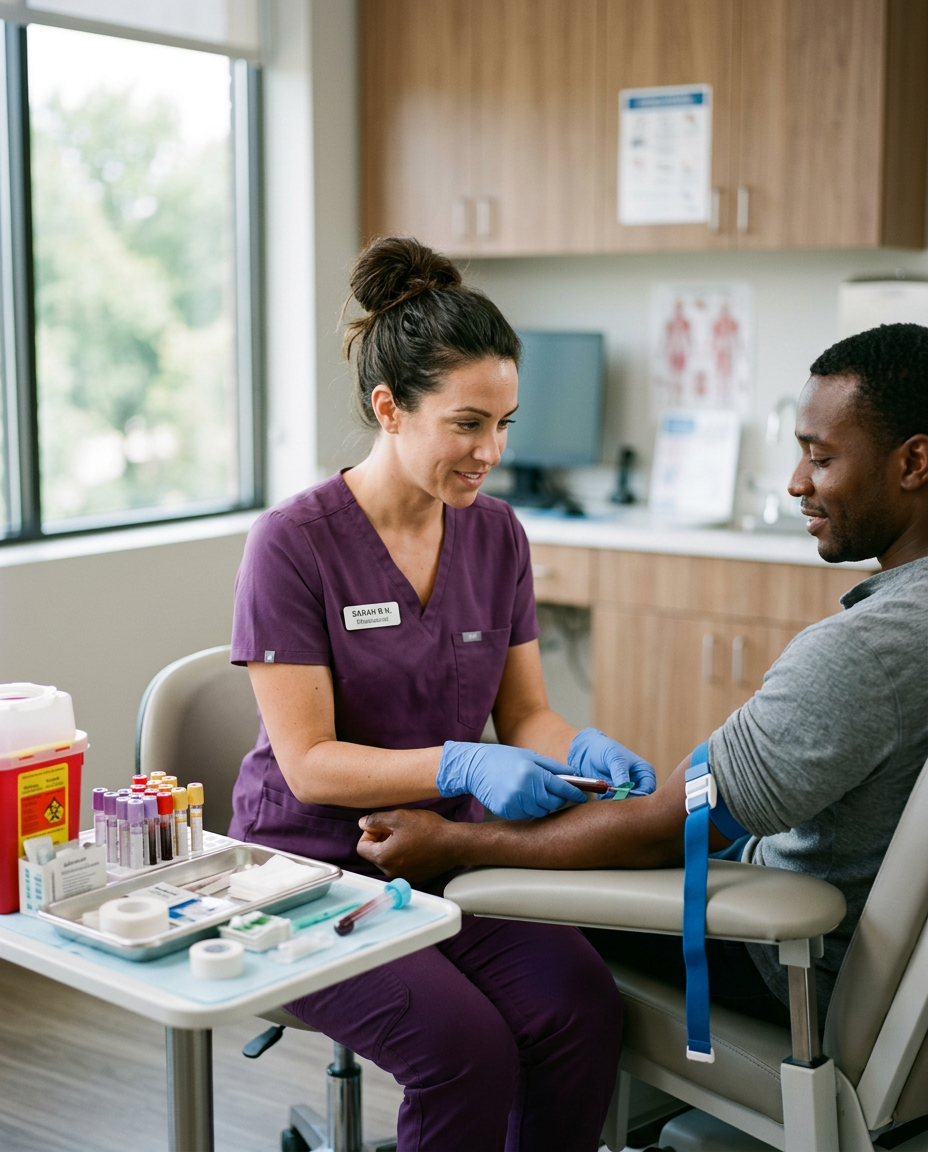
Retest intervals depend on what you are tracking and whether you have started a new intervention. For most stable adults, a yearly panel is reasonable. After starting TRT, GLP-1s, thyroid medication, or a lipid-lowering drug, 8 to 12 weeks is the window most guidelines use to confirm response before adjusting.
Most people either test too often — chasing weekly fluctuations that are mostly noise — or test once and never again, missing the slow drift that actually matters. The right cadence sits between those two, and it depends almost entirely on why you're testing in the first place.
Below is a practical retesting schedule organized by the question you're trying to answer: am I stable, am I responding to a new medication, or am I managing a known condition?
Why retesting intervals exist in the first place
Biology moves at its own pace. A lipid panel checked three days after starting a statin tells you nothing useful. Hemoglobin A1c reflects roughly the prior 90 days of glucose exposure, so rechecking at week six is checking the same number you already have.
Every lab has a biological half-life — the time it takes for a change in physiology to actually show up in the number. Retesting faster than that half-life is how you end up with a chart full of noise and a plan built on it.
The second variable is clinical: has anything changed? New medication, new dose, new symptom, new life stage. If nothing has changed, annual is usually enough. If something has changed, the clock resets.
The baseline question: what are you tracking?
Before picking an interval, name the marker and the reason. A few common examples:
- Lipids (ApoB, LDL-C, triglycerides): reflect weeks of hepatic metabolism and diet.
- A1c: reflects ~3 months of average glucose.
- TSH and free T4: respond over 6–8 weeks to a dose change in levothyroxine.
- Total testosterone, free testosterone, estradiol, hematocrit: respond within weeks of starting or adjusting TRT.
- Ferritin, vitamin D, B12: shift over months with supplementation.
- hs-CRP: inflammatory, can swing with any acute illness, so a single value is weak evidence.
The labs worth having before a serious protocol are the ones that will anchor every future comparison — so if you're going to test, test the right panel the first time.
If you're stable and asymptomatic: annual is usually enough
For an adult with no new medications, no new symptoms, and prior labs in range, a once-yearly panel is a reasonable default. The USPSTF recommends diabetes screening every three years in asymptomatic adults with normal glucose, and cholesterol is typically reassessed every 4–6 years in low-risk adults — annual testing in a comprehensive panel is more aggressive than those minimums, which is the point of concierge-style tracking.
For adults over 40, or anyone with a family history of cardiovascular or metabolic disease, yearly is where most clinicians land.
The rule of thumbIf nothing has changed clinically, retest annually. If something has changed — a new medication, a new symptom, a new dose — retest at the interval that matches the biology of the marker, not your anxiety about it.
After starting TRT: check at 8–12 weeks, then every 6–12 months
The Endocrine Society's 2018 clinical practice guideline on testosterone therapy in men with hypogonadism recommends evaluating response and adverse effects at 3–6 months after initiation, then annually once stable. The markers that typically get re-run on that timeline include total testosterone, hematocrit, PSA (in appropriate age groups), and often estradiol depending on the clinical picture.
Hematocrit is the one that drives earlier rechecks in some patients — erythrocytosis is a known class effect, and if it's trending up, the interval tightens.
After starting a GLP-1 or GIP/GLP-1: 3 months, then every 6
For patients on tirzepatide or semaglutide, the labs that matter aren't the weight itself — the scale handles that. The useful bloodwork is metabolic: A1c, fasting glucose, lipid panel, liver enzymes, and kidney function. A1c reflects ~90 days, so rechecking at month three is the first point where the number is actually telling you something new.
After that, every 6 months is a reasonable cadence for most stable patients, with the clinician tightening or loosening based on comorbidities.
After a thyroid dose change: 6–8 weeks
The American Thyroid Association guidelines for hypothyroidism recommend reassessing TSH approximately 4–8 weeks after any dose change in levothyroxine, because that's roughly how long TSH takes to re-equilibrate. Once a patient is stable on a dose, every 6–12 months is standard.
Testing TSH two weeks after a dose change is a common mistake — the number isn't wrong, it's just early, and acting on it leads to over-adjustment.
After starting a statin or other lipid therapy: 4–12 weeks
The 2018 AHA/ACC cholesterol guideline recommends a fasting lipid panel 4–12 weeks after starting or adjusting statin therapy to assess adherence and response, then every 3–12 months as clinically indicated. ApoB, if you're tracking it, follows the same window.
For diabetes and prediabetes: A1c every 3–6 months
The ADA Standards of Care recommend A1c at least twice yearly in patients meeting treatment goals with stable glycemic control, and quarterly in patients whose therapy has changed or who are not meeting goals. That cadence maps directly to the 90-day biology of the marker — faster retesting is retesting the same window.
Markers that need their own clock
A few labs don't fit the annual rhythm:
- Ferritin and iron studies after supplementation: 8–12 weeks.
- Vitamin D after a new supplement dose: ~3 months.
- PSA monitoring: individualized, typically annual in appropriate age groups.
- Hematocrit on TRT: as often as every 3 months early on, then annually when stable.
- Liver enzymes on a new hepatotoxic medication: per the drug's label, often at 4–12 weeks.
The practical schedule, in one view
- Stable, no changes: annual comprehensive panel.
- New medication started: recheck at the marker's biological window (4–12 weeks for most).
- Dose adjustment: same interval as a new start.
- Symptom change: test now, don't wait for the calendar.
- Chronic condition under management: every 3–6 months per the relevant guideline.
The goal isn't more data. It's data spaced far enough apart that each number actually means something.
If you're building a personal tracking schedule, the honest answer is that the first panel is the hardest — it sets the baseline every future test compares against. After that, the cadence mostly writes itself: annual when stable, tighter when something changes, and matched to the biology of the marker you care about.
References
- Bhasin S, Brito JP, Cunningham GR, et al. Testosterone Therapy in Men With Hypogonadism: An Endocrine Society Clinical Practice Guideline. J Clin Endocrinol Metab. 2018;103(5):1715-1744. Source
- Jonklaas J, Bianco AC, Bauer AJ, et al. Guidelines for the Treatment of Hypothyroidism: ATA Task Force on Thyroid Hormone Replacement. Thyroid. 2014;24(12):1670-1751. Source
- Grundy SM, Stone NJ, Bailey AL, et al. 2018 AHA/ACC Guideline on the Management of Blood Cholesterol. Circulation. 2019;139(25):e1082-e1143. Source
- ElSayed NA, Aleppo G, Aroda VR, et al. Standards of Care in Diabetes—2023. Diabetes Care. 2023;46(Suppl 1):S1-S291. Source
- US Preventive Services Task Force. Screening for Prediabetes and Type 2 Diabetes: Recommendation Statement. JAMA. 2021;326(8):736-743. Source
Real labs. Plain-English plan.
A clinician-ordered, 80+ biomarker panel. Results in 3–5 days, with a personalized roadmap from a US-licensed clinician — not a chart you have to decode yourself.
See my numbers →Editorial disclosure: This article is for informational purposes only and does not constitute medical advice. All treatments at DirectCare AI are prescribed by US-licensed clinicians based on individual medical evaluation. Compounded medications are not FDA-approved and are not reviewed by the FDA for safety, effectiveness, or quality. Always consult a US-licensed clinician before starting or changing any therapy.