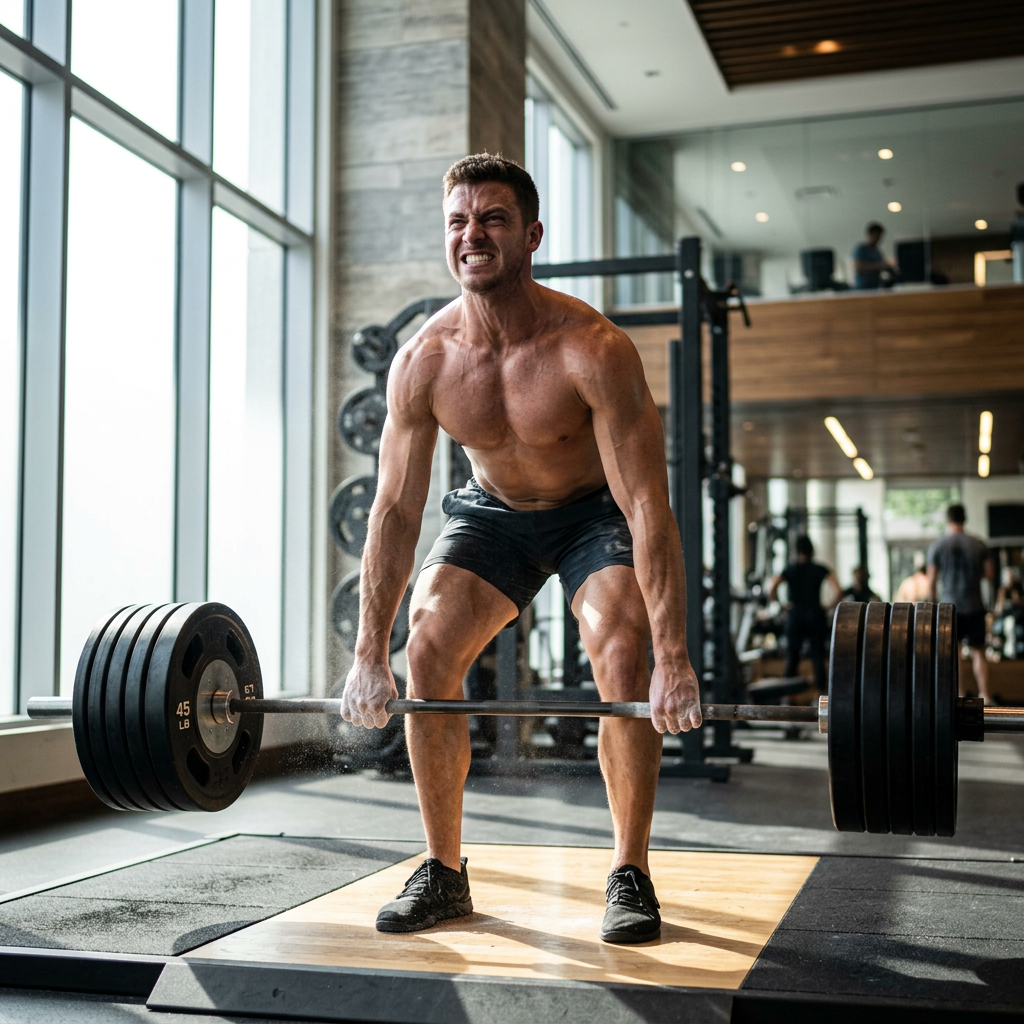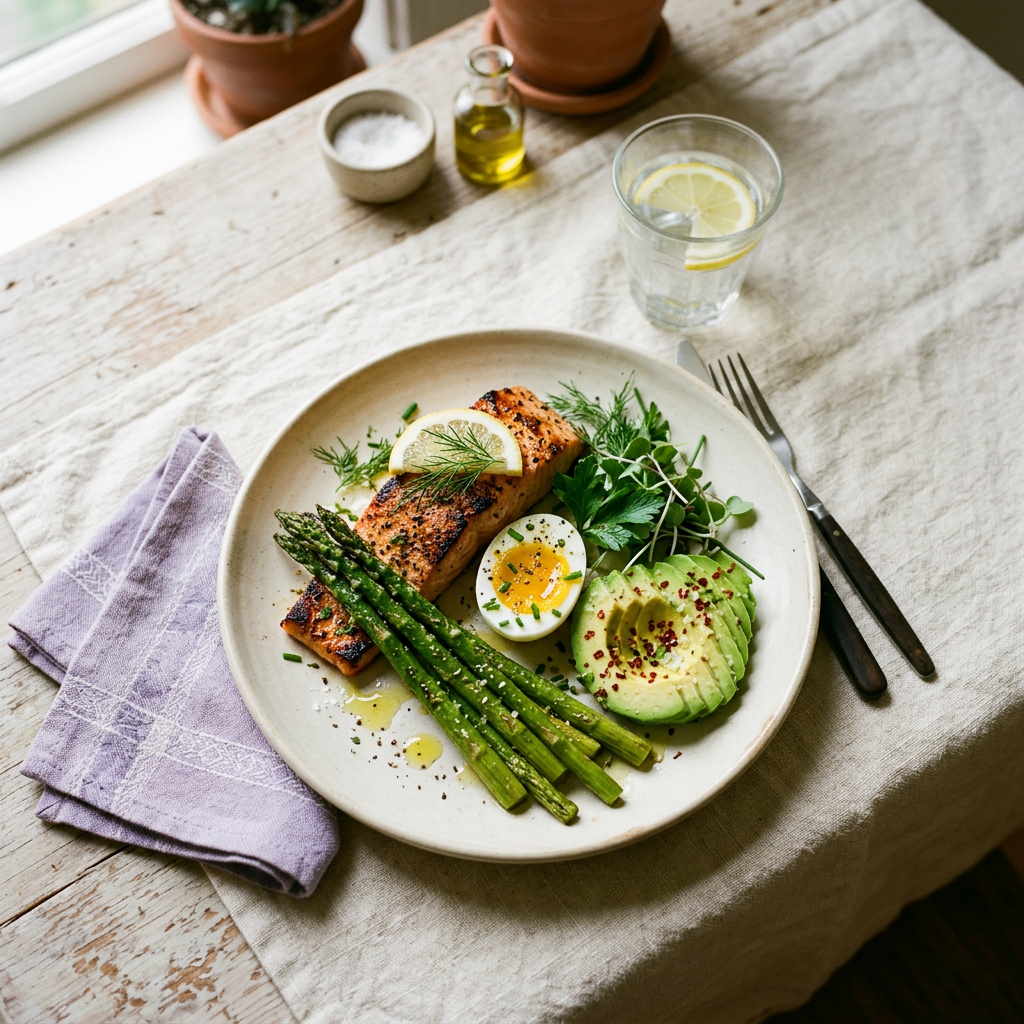
To preserve muscle while using GLP-1 medications like semaglutide or tirzepatide, aim for 1.6 to 2.2 grams of protein per kilogram of goal body weight each day, spread across 3 to 4 meals, with protein consumed first at each meal. Combine this with resistance training 2 to 3 times per week, focusing on full-body compound lifts performed to within 1–3 reps of failure, with 10 to 20 hard sets per muscle group weekly.
GLP-1 receptor agonists like semaglutide and tirzepatide reliably produce 15–20%+ total body weight loss in trials like STEP-1 and SURMOUNT-1. What those headline numbers don't tell you: a meaningful fraction of that loss is lean mass, not fat.
In the STEP-1 sub-study using DXA, roughly 39% of the total weight lost on semaglutide was lean mass. That's not unique to GLP-1s — any rapid caloric deficit does this — but the magnitude and duration of the deficit these drugs produce makes muscle preservation a real clinical priority, not a nice-to-have.
This is the protein and training protocol that actually moves the needle.
Why GLP-1s cost you muscle if you let them
Three mechanisms stack:
1. Caloric deficit is large and sustained. Appetite suppression can drop intake by 30–40% for months. The body doesn't preferentially burn fat in that state — it catabolizes whatever isn't being used, and skeletal muscle is metabolically expensive tissue. 2. Protein intake usually falls in absolute terms. Even patients who "eat cleaner" often eat less protein on GLP-1s because early satiety kills appetite for dense foods like steak, chicken thighs, and eggs before they finish the plate. 3. Activity often drops. Fatigue, nausea, and lower food intake mean people move less and lift less exactly when they need the mechanical stimulus most.
The fix isn't complicated. It's just non-negotiable.
How much protein you actually need — tuned to your numbers
The general population guideline of 0.8 g/kg is a floor for sedentary adults, not a target for someone in a sustained deficit trying to preserve lean mass.
A commonly cited target during active weight loss is roughly 1.2–1.6 g/kg of goal body weight per day, per a 2018 meta-analysis in the British Journal of Sports Medicine (Morton et al.) and follow-up work by Longland, Phillips, and others.
Practical translation for a 200 lb (91 kg) adult with a goal weight of 170 lb (77 kg):
- Floor: 77 × 1.6 = ~123 g protein/day
- Ceiling worth targeting: 77 × 2.2 = ~170 g protein/day
Distribute across 3–4 feedings of 30–50 g each. The muscle protein synthesis literature (Areta et al., Journal of Physiology) is consistent: pulsed doses beat one giant dinner.
The GLP-1 problem: you can't eat that much
This is where patients get stuck. If your appetite is suppressed 40%, hitting 150 g of protein from whole food is genuinely hard. Two rules help:
- Protein first, every meal. Eat the protein portion before the carbs and vegetables. If early satiety hits, you've banked what matters.
- Liquid protein counts. A whey or casein shake with 30–40 g of protein is not a compromise — it's a tool. Two shakes a day plus two protein-forward meals is a legitimate strategy on a GLP-1.
Resistance training: what actually changes body composition
Cardio is fine for cardiovascular health. It does not preserve muscle in a deficit. Only resistance training does.
The ACSM position stand on resistance training (2009, reaffirmed) and more recent meta-analyses converge on a minimum effective dose during weight loss:
- Frequency: 2–3 sessions per week, full body
- Volume: 10–20 hard sets per muscle group per week
- Intensity: 6–15 reps taken to within 1–3 reps of failure
- Progression: add weight or reps whenever you hit the top of your rep range with good form
You do not need to train like a bodybuilder. You do need to train like you mean it. Three 45-minute full-body sessions per week, built around compound lifts, is enough.
A minimum-viable weekly template
Day 1 (Full body A):
- Goblet squat or leg press — 3×8–10
- Dumbbell bench press — 3×8–10
- One-arm row — 3×10–12/side
- Plank — 3×30–45 sec
Day 2 (Full body B):
- Romanian deadlift — 3×8–10
- Overhead press (DB or machine) — 3×8–10
- Lat pulldown or assisted pull-up — 3×8–12
- Split squat — 2×10/side
Day 3 (optional third session): repeat Day 1 with slight variation or focus on any lagging area.
Rest 60–120 seconds between sets. Warm-up: 5 minutes easy cardio plus 1–2 lighter sets of the first compound lift.
The nausea and fatigue problem — in plain English
Weeks 1–4 of a titration, and the week after every dose increase, are hard. Realistic adjustments:
- Train fasted or several hours post-meal. Full stomach + GLP-1 + squats = predictable outcome.
- Prioritize the first compound lift. If you can only do half a workout, do the hardest thing first.
- Sip electrolytes. Reduced food intake means reduced sodium and potassium; low-grade dehydration masquerades as workout fatigue.
- Don't skip weeks. Detraining begins around 10–14 days. One bad session is fine. Three weeks off is muscle you have to rebuild.
Labs and biomarkers worth watching
A thorough workup for someone on a GLP-1 who cares about body composition would typically include a few markers that catch muscle loss and metabolic drift before the scale does:
- DXA or InBody scan at baseline and every 3–4 months — the only reliable way to know if you're losing fat or lean mass
- Fasting insulin and HbA1c — GLP-1s improve both, but track the trend
- CMP — creatinine can drop with muscle loss; it's a subtle but real signal
- Vitamin D, ferritin, B12 — deficiencies compound fatigue and blunt training recovery
- Total and free testosterone in men — low T plus a caloric deficit plus inadequate protein is the muscle-loss trifecta
If you choose to run labs through us, these are the ones we'd look at first for a patient prioritizing lean mass on a GLP-1.
Common mistakes we see
- Chasing the scale. A patient losing 2 lb/week who's lost 3 lb of muscle in a month is not winning. The scale is a lagging, noisy signal.
- All cardio, no lifting. Preserves nothing. Burns calories you don't need to burn.
- Protein powder as an afterthought. If whole-food protein is hard, shakes aren't optional — they're the plan.
- Stopping the medication and losing everything. Discontinuation without a maintained protein-and-training habit predicts weight regain. The habits are what hold the loss.
The medication creates the deficit. The protein and the lifting decide what you lose inside it.
The bottom line
GLP-1s are a genuinely powerful tool for weight loss. They are not, on their own, a body-composition tool. That part is on you and requires two inputs: enough protein, distributed across the day, and 2–3 real resistance-training sessions per week.
Do those two things and the fat loss the medication drives becomes the body composition change you actually wanted.
References
- Locatelli JC et al. Incretin-Based Weight Loss Pharmacotherapy: Can Resistance Exercise Optimize Changes in Body Composition?. Diabetes Care. 2024. Source
- Eisa N et al. Lean Mass Changes With Incretin Therapy Versus Lifestyle Intervention: A Systematic Review and Meta-Analysis of Randomised Controlled Trials. Diabetes Obes Metab. 2026. Source
Sustainable weight loss, built around your labs.
Compounded semaglutide and tirzepatide. Weekly injection, US-licensed clinician oversight, dose titration based on your real bloodwork — not a one-size-fits-all script.
See if you qualify →Editorial disclosure: This article is for informational purposes only and does not constitute medical advice. All treatments at DirectCare AI are prescribed by US-licensed clinicians based on individual medical evaluation. Compounded medications are not FDA-approved and are not reviewed by the FDA for safety, effectiveness, or quality. Always consult a US-licensed clinician before starting or changing any therapy.