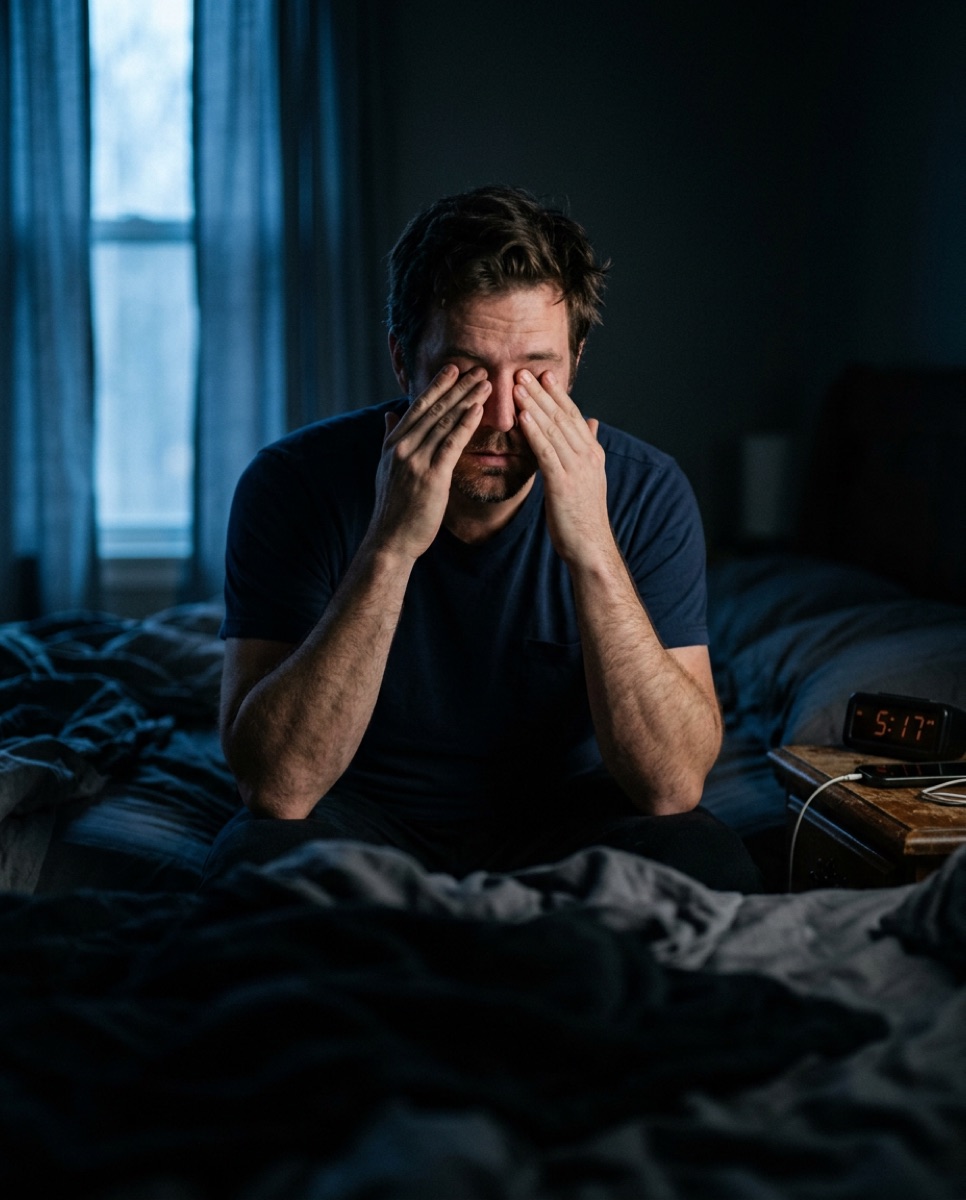
In a 2011 study published in JAMA, 10 healthy young men who were limited to 5 hours of sleep a night for one week had daytime testosterone levels 10% to 15% lower than when they were fully rested. For comparison, testosterone normally declines 1% to 2% a year with age.
Most of the testosterone a man makes each day is released during sleep. Researchers at the University of Chicago tested what happens to daytime levels when that sleep is cut short for a week.
What the study did
Ten healthy men, average age 24, stayed in a sleep laboratory for 11 days. They spent three nights with 10 hours in bed to become fully rested, followed by eight nights limited to 5 hours, from 12:30 a.m. to 5:30 a.m.
Blood was drawn every 15 to 30 minutes across a full 24 hours, once at the end of the rested phase and once after a week of short nights.
What it found
- Daytime testosterone was 10% to 15% lower after the week of short sleep
- The drop was largest in the afternoon and evening, between 2 p.m. and 10 p.m.
- The men's self-rated vigor fell steadily across the week
The authors put the size in context: normal aging lowers testosterone by 1% to 2% a year.
What this means for a blood test
The Endocrine Society guideline says low testosterone should be diagnosed only in men with symptoms and consistently low levels, confirmed with a repeat morning fasting test. Poor sleep in the days before a test is one reason a single result can read low. Our guide to morning testosterone test timing explains why the hour of the draw matters too.
Sleep habits worth fixing first
- Keep a regular bedtime and wake time
- Aim for seven or more hours a night
- Keep the bedroom dark, cool and quiet
- Limit alcohol in the evening, since it fragments sleep
When to talk with a clinician
Loud snoring with pauses in breathing can indicate sleep apnea, which is linked with low testosterone and is treatable. Our article on testosterone and sleep apnea covers that relationship. If fatigue, low libido or low mood persist after several weeks of good sleep, a licensed clinician can order a proper morning panel and review it with you.
This article is educational and is not medical advice. Talk with a licensed clinician about your own health.
References
- Leproult R, Van Cauter E. Effect of 1 week of sleep restriction on testosterone levels in young healthy men. JAMA. 2011;305(21):2173-2174. Source
- Bhasin S, Brito JP, Cunningham GR, et al. Testosterone Therapy in Men With Hypogonadism: An Endocrine Society Clinical Practice Guideline. J Clin Endocrinol Metab. 2018;103(5):1715-1744. Source
Real labs. Plain-English plan.
A clinician-ordered, 80+ biomarker panel. Results in 3–5 days, with a personalized roadmap from a US-licensed clinician — not a chart you have to decode yourself.
See my numbers → →Editorial disclosure: This article is for informational purposes only and does not constitute medical advice. All treatments at DirectCare AI are prescribed by US-licensed clinicians based on individual medical evaluation. Compounded medications are not FDA-approved and are not reviewed by the FDA for safety, effectiveness, or quality. Always consult a US-licensed clinician before starting or changing any therapy.