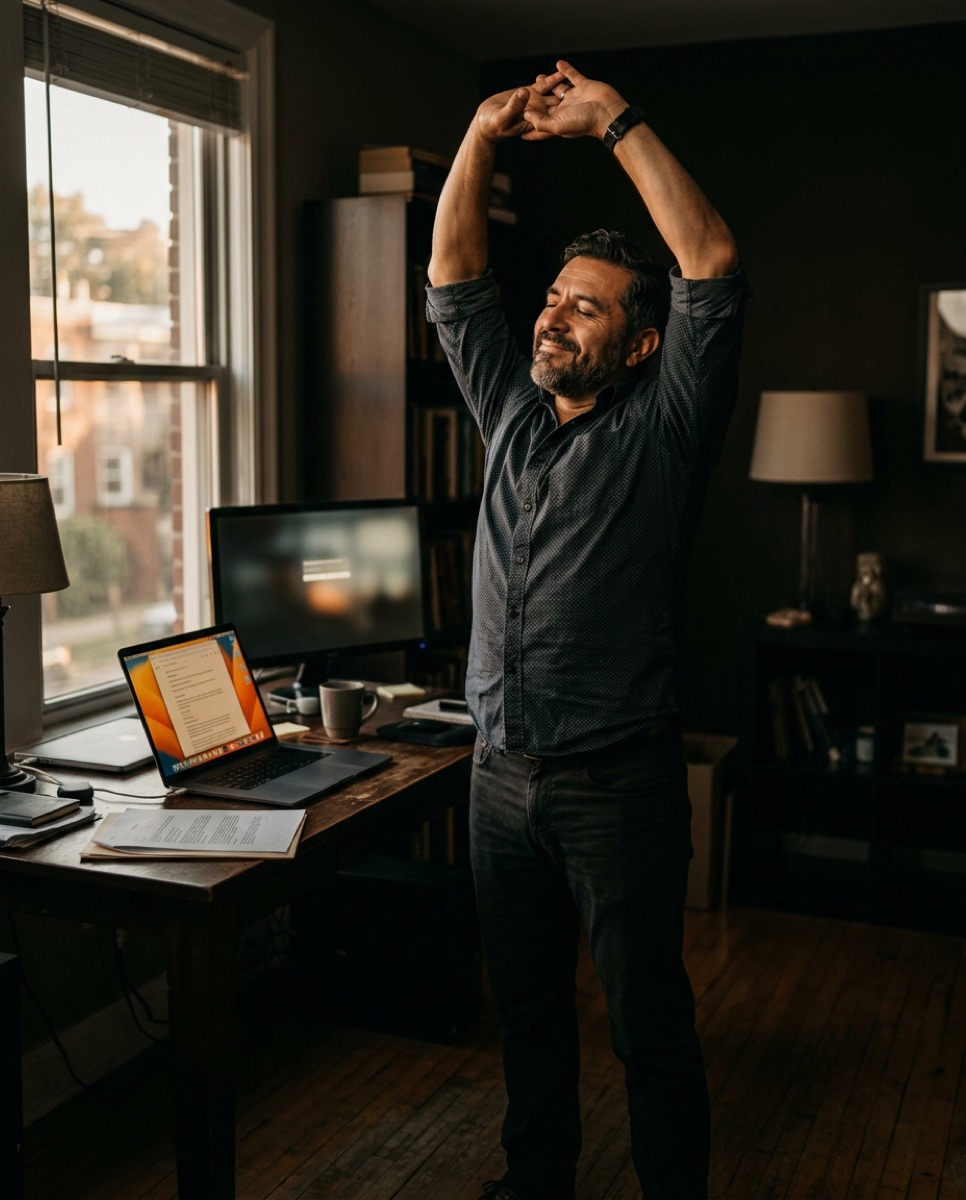
In a 2012 randomized crossover trial of adults with overweight or obesity, interrupting sitting with a 2-minute walk every 20 minutes lowered the post-meal rise in blood sugar by about 24% and in insulin by about 23%, compared with uninterrupted sitting. Light walking worked as well as brisk walking.
Many adults sit for most of the working day, then sit again in the evening. An hour of exercise is valuable, but it leaves many hours of stillness around it. Researchers at the Baker Heart and Diabetes Institute in Melbourne tested what happens when that sitting is broken into short pieces.
What the trial did
Nineteen adults aged 45 to 65 with overweight or obesity each spent three separate days in the lab:
- Day A: sitting for hours without a break
- Day B: sitting, with a 2-minute light walk every 20 minutes
- Day C: sitting, with a 2-minute moderate walk every 20 minutes
On each day they drank a standard test meal, and blood sugar and insulin were tracked for the next five hours.
What it found
Compared with uninterrupted sitting, the rise in blood sugar after the meal was about 24% lower with light walking breaks and about 29% lower with moderate ones. The rise in insulin was about 23% lower with either. The two walking speeds were not meaningfully different from each other.
A 2022 review in Sports Medicine that pooled seven studies reached a similar conclusion: short bouts of light walking through the day lowered post-meal blood sugar more than standing breaks did.
Why two minutes helps
Working muscle pulls glucose out of the blood, and it does so partly without needing insulin. The large muscles of the legs are mostly idle in a chair. A short walk switches them back on.
How to build it into a day
- Set a timer for 20 to 30 minutes and stand up when it goes off
- Walk to refill water, take the stairs one floor, or do a lap of the hallway
- Take phone calls on your feet
- After meals, add a slightly longer walk. Our guide to the post-meal walk covers timing
When to talk with a clinician
If you have diabetes and take insulin or medication that can lower blood sugar, ask your clinician how added activity fits with your treatment.
This article is educational and is not medical advice. Talk with a licensed clinician about your own health.
References
- Dunstan DW, Kingwell BA, Larsen R, et al. Breaking up prolonged sitting reduces postprandial glucose and insulin responses. Diabetes Care. 2012;35(5):976-983. Source
- Buffey AJ, Herring MP, Langley CK, Donnelly AE, Carson BP. The Acute Effects of Interrupting Prolonged Sitting Time in Adults with Standing and Light-Intensity Walking on Biomarkers of Cardiometabolic Health in Adults: A Systematic Review and Meta-analysis. Sports Med. 2022;52(8):1765-1787. Source
Personalized telehealth, on your terms.
A US-licensed clinician reviews your bloodwork and builds a protocol around your real numbers. Labs included.
Get started →Editorial disclosure: This article is for informational purposes only and does not constitute medical advice. All treatments at DirectCare AI are prescribed by US-licensed clinicians based on individual medical evaluation. Compounded medications are not FDA-approved and are not reviewed by the FDA for safety, effectiveness, or quality. Always consult a US-licensed clinician before starting or changing any therapy.